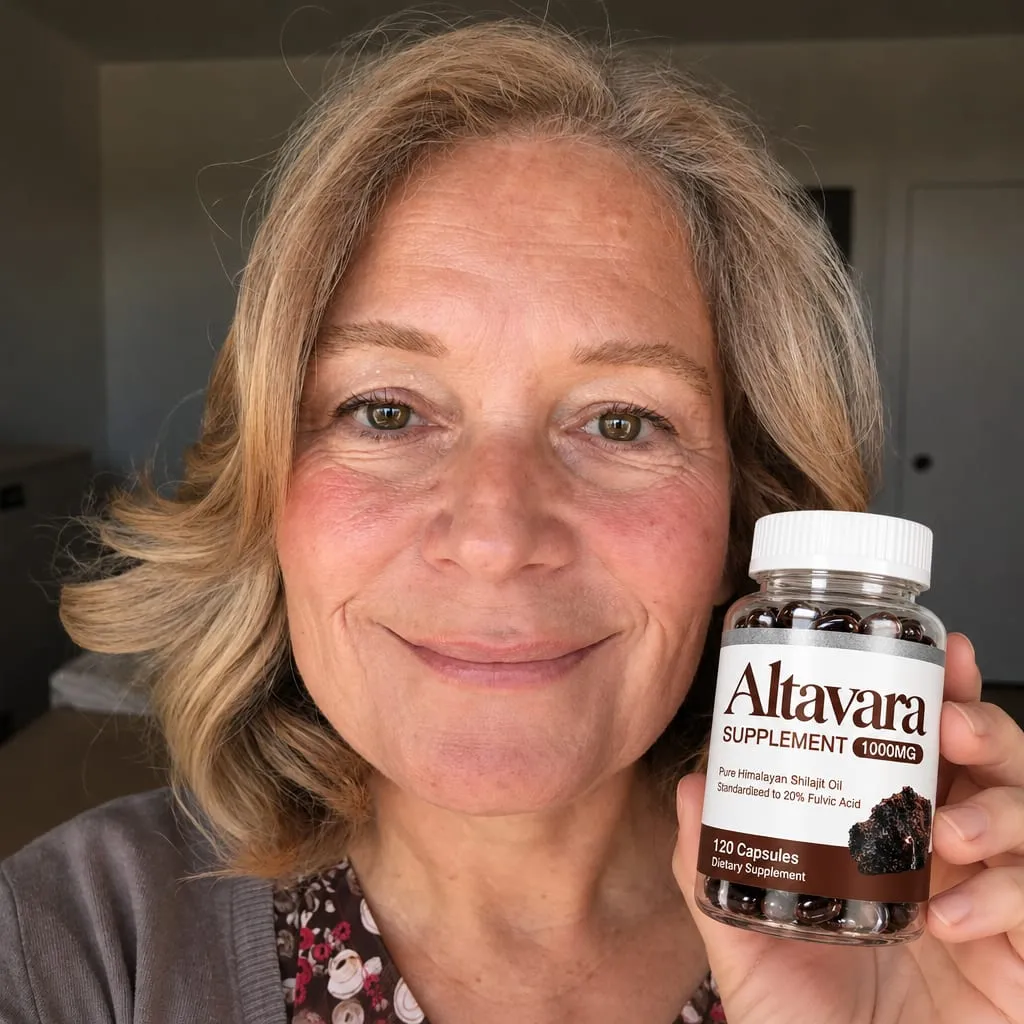
★★★★★
"My T-score improved from −2.6 to −2.1 in seven months. My doctor asked me what had changed. I'm 63."

Home > Health > Investigative Journalism

Over thirty years she spent almost four thousand pounds on calcium supplements, yet her bones were in worse condition than ever. Then a retired research nurse who had worked in London asked her a single question that changed everything. Here is her story in her own words.
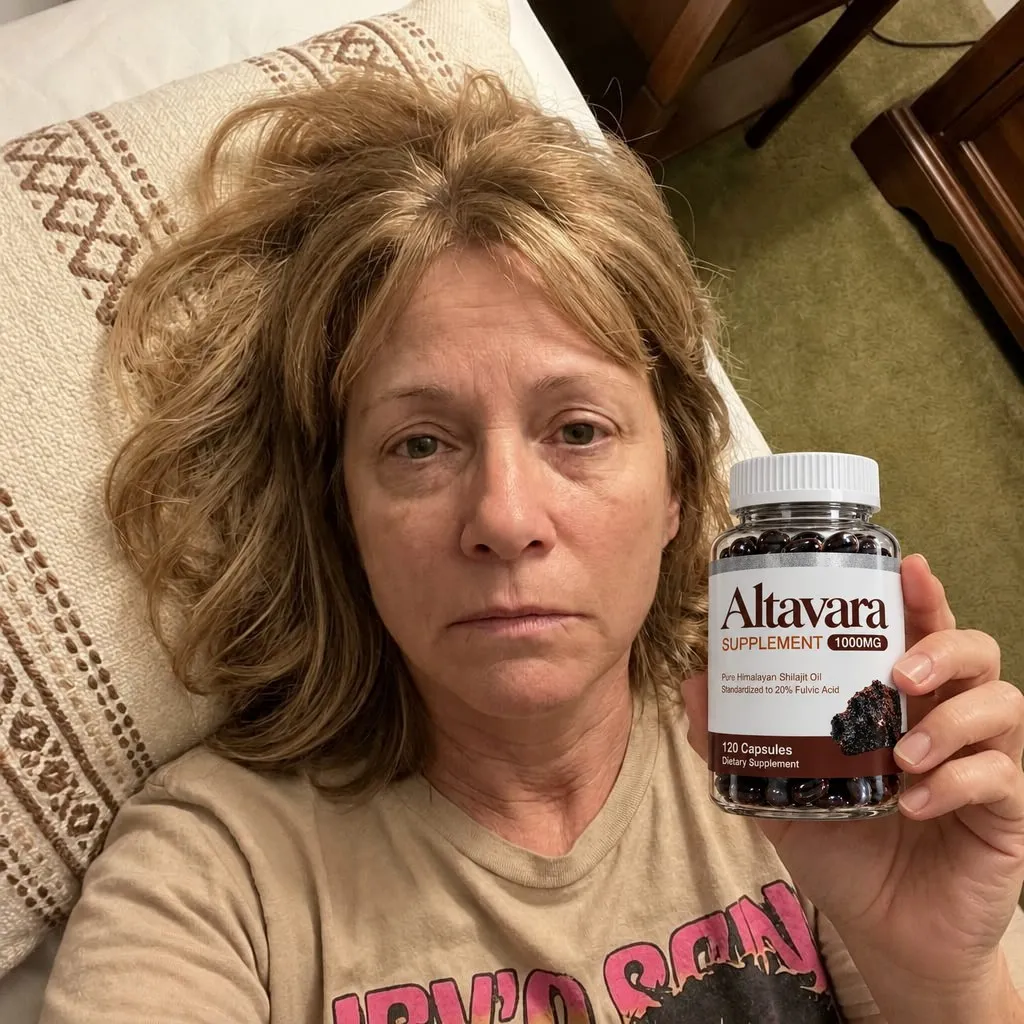
This was me eight months ago. Awake at two in the morning, frightened, with no answers.
When my endocrinologist saw the results of my DEXA bone density scan at my six-month follow-up, he stopped my denosumab prescription and asked what else I had been taking.
I stared at him, confused. What had I been using? I had been using everything.
Calcium citrate, because I had read that calcium carbonate is poorly absorbed by the body. Vitamin D3, not vitamin D2. Vitamin K2 in the MK-7 form, because it stays in the body longer. Magnesium glycinate in the evening. I didn't choose the supplements all at once. I had spent months reading studies and comparing product information.
"Something has changed. The bone density in your lumbar spine has improved by 11% within six months. The bone density in your hip has improved by 8%. That doesn't normally happen at 61."
If you have been taking calcium supplements for years and your DEXA bone density scan still keeps getting worse.
If you have already tried calcium citrate, algae-based calcium, vitamin D3, vitamin K2 and magnesium, and none of them helped.
If your doctors have pressured you to take denosumab or alendronate, and the side effects have worried you.
If you are noticing the same changes in yourself that you saw in your mother, and nobody can explain why, you need to know what happened next.
Eight months earlier, my doctor had rung me with the results of my DEXA bone density scan. "Your lumbar spine T-score is −2.3."
I had been taking calcium supplements since my thirties. Almost thirty years of one large, chalky tablet every morning. "You need to increase your daily calcium intake to 1,200 milligrams," he said. "We should also talk about hormone replacement therapy."
That night I searched for information on hormone replacement therapy. On the increased risks for women over 60. On blood clots. On strokes. I had been through the menopause for ten years, and the risks frightened me more than the diagnosis itself. But the diagnosis on its own was frightening enough.
My mother broke a bone for the first time at 67. Her wrist broke as she reached for a coffee cup. She died at 73, a year and a half after breaking her hip. I remember the care home and how she gradually grew weaker and weaker until I no longer recognised her. I felt I didn't have much time left to change something.
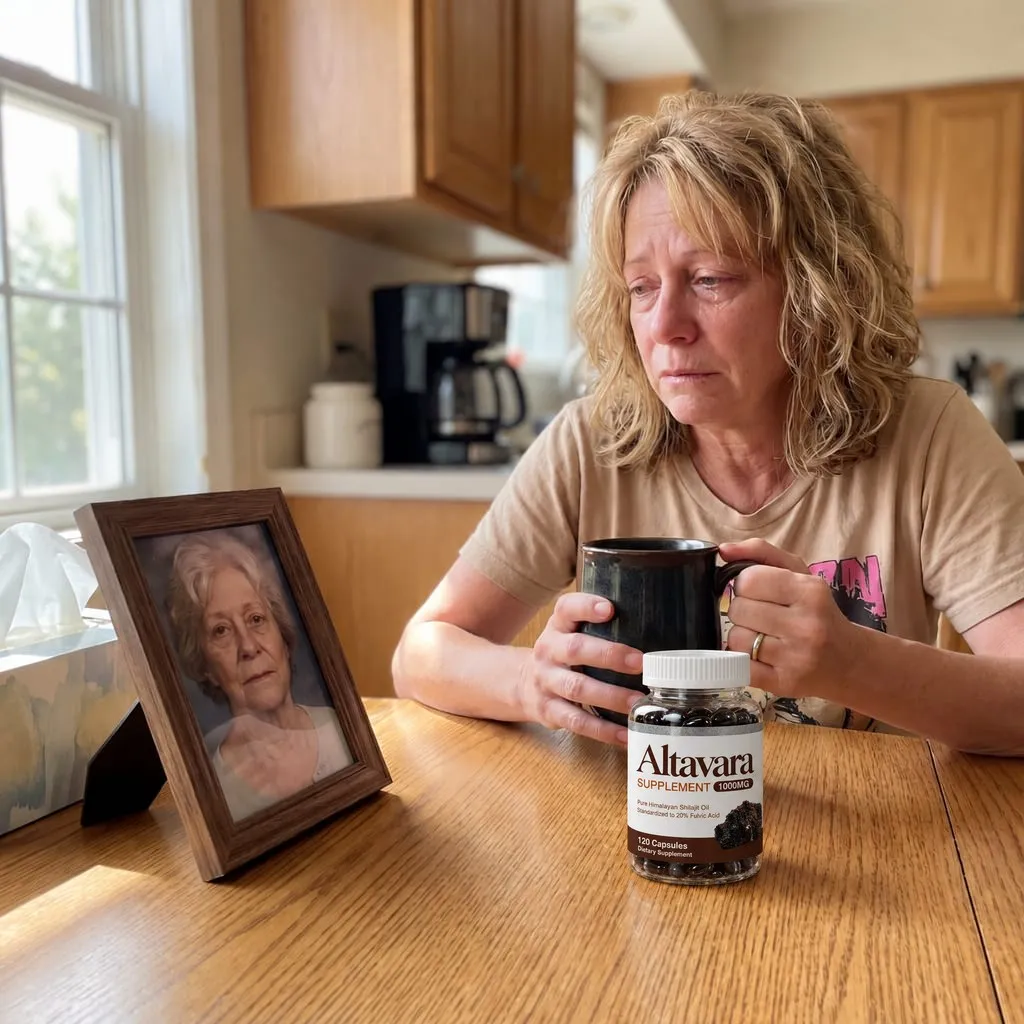
Her mother, wasting away after a hip fracture. The future she was trying to escape.
I spent the whole night searching online for alternative osteoporosis treatments until my eyes burned. Strontium had been banned in some countries. Vitamin K might help - or might not. The forums were full of women just as frightened as I was. We swapped tips, none of which made any difference.
So I got stuck into the research. Not just the question of what to take, but also how the ingredients work in the body. I read that calcium citrate is absorbed better than calcium carbonate, that vitamin D3 supports calcium absorption and that vitamin K2 is involved in bone metabolism. The MK-7 form stays in the body longer.
I even tried an algae-based calcium supplement. Calcium from algae, which was supposed to be better. Eighty pounds a month for four months. In total it cost £320. The total cost of calcium, vitamin D3, vitamin K2, magnesium and algae calcium came to over £140 a month.
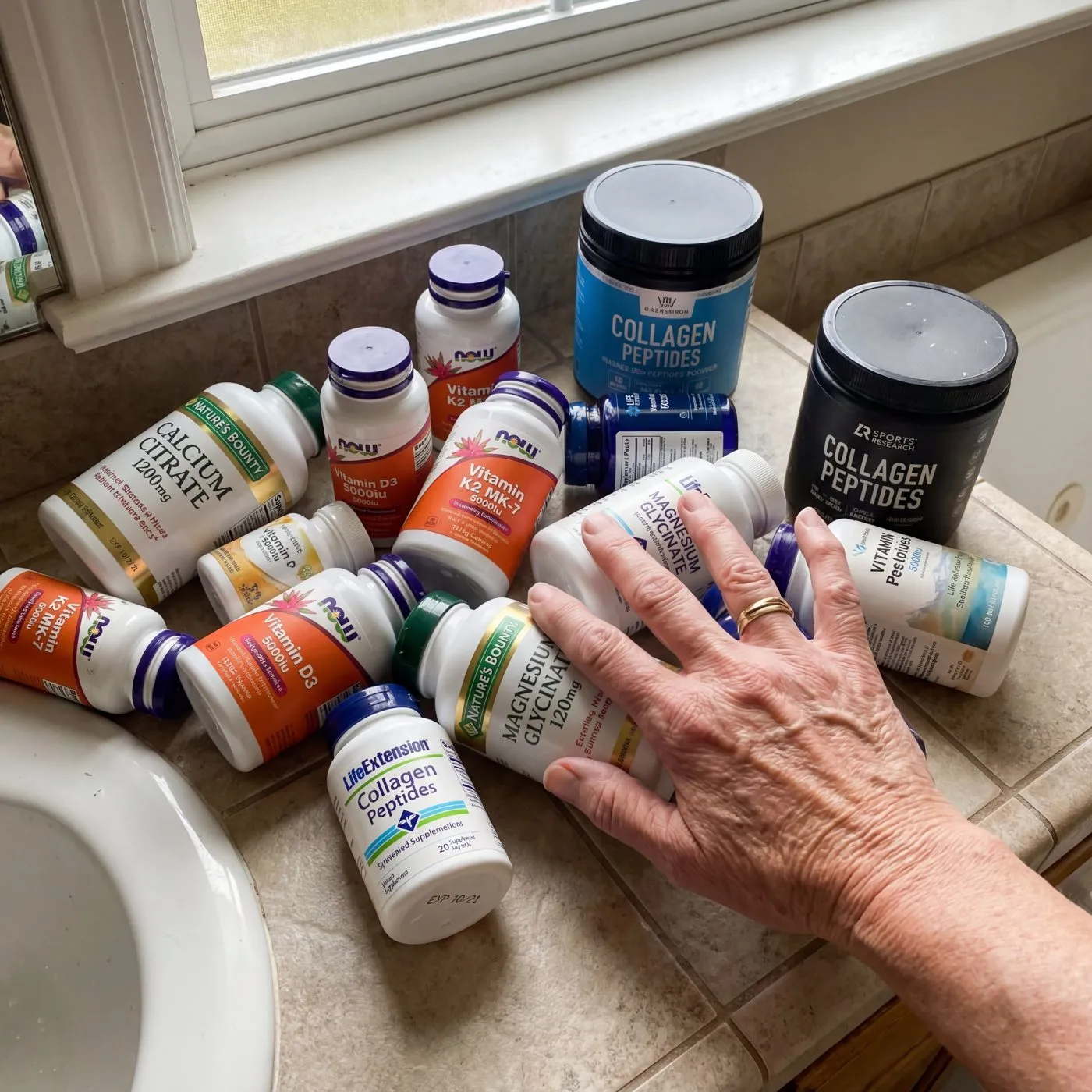
Thirty years of calcium supplements. Over £140 a month. And the bone density results kept getting worse.
Then I rang my old friend Mary, a research nurse who had worked in London for 22 years before she retired.
"Are you still taking all those calcium supplements?" she asked, after I had told her about my situation.
"Of course. In the right form. Calcium citrate. 1,200 milligrams a day. Plus vitamin D3, vitamin K2 and magnesium."
She was silent for so long that I thought we had been cut off.
"Where do you think all that calcium goes?"
It's 2:47 in the morning and I'm reading actual studies. Not supplement adverts.
She explained it quite simply. Calcium is like building material. After the menopause, when oestrogen levels fall, the bones lose the ability to move calcium to where it belongs. So it settles wherever it can. In the arteries, the kidneys and the soft tissue. Everywhere except the bones.
"You're not strengthening your bones," she said. "While your bones waste away, everything else is calcifying."
That's when I finally understood. It wasn't the supplements. There was nothing wrong with their composition either. Something wasn't right with the mechanism. I had been trying to solve the calcium problem when the real problem was oestrogen.
Vitamin K2 helps with calcium uptake, but only if the bones can respond to those signals. Without oestrogen, they can't. Vitamin D increases absorption, which means the body takes in more calcium that it can't use properly. I had optimised everything except the one thing that really mattered.
34 %
11 %
8%
"I didn't say nothing works," said Mary. "I said your bones need the signals that oestrogen sends. Have you ever heard of fulvic acid?"
I hadn't. I couldn't sleep that night. I came across a study on a substance called shilajit (pronounced "shi-LAH-jit"). It is a substance that has been studied by leading universities and medical research institutions worldwide. The researchers identified fulvic acid as the main active ingredient.
A clinical study of postmenopausal women with osteopenia was carried out and published in a peer-reviewed journal. The study lasted 48 weeks. It led to a natural restoration of oestrogen levels, and as oestrogen levels normalised, bone density improved too. It didn't stay the same - it improved.
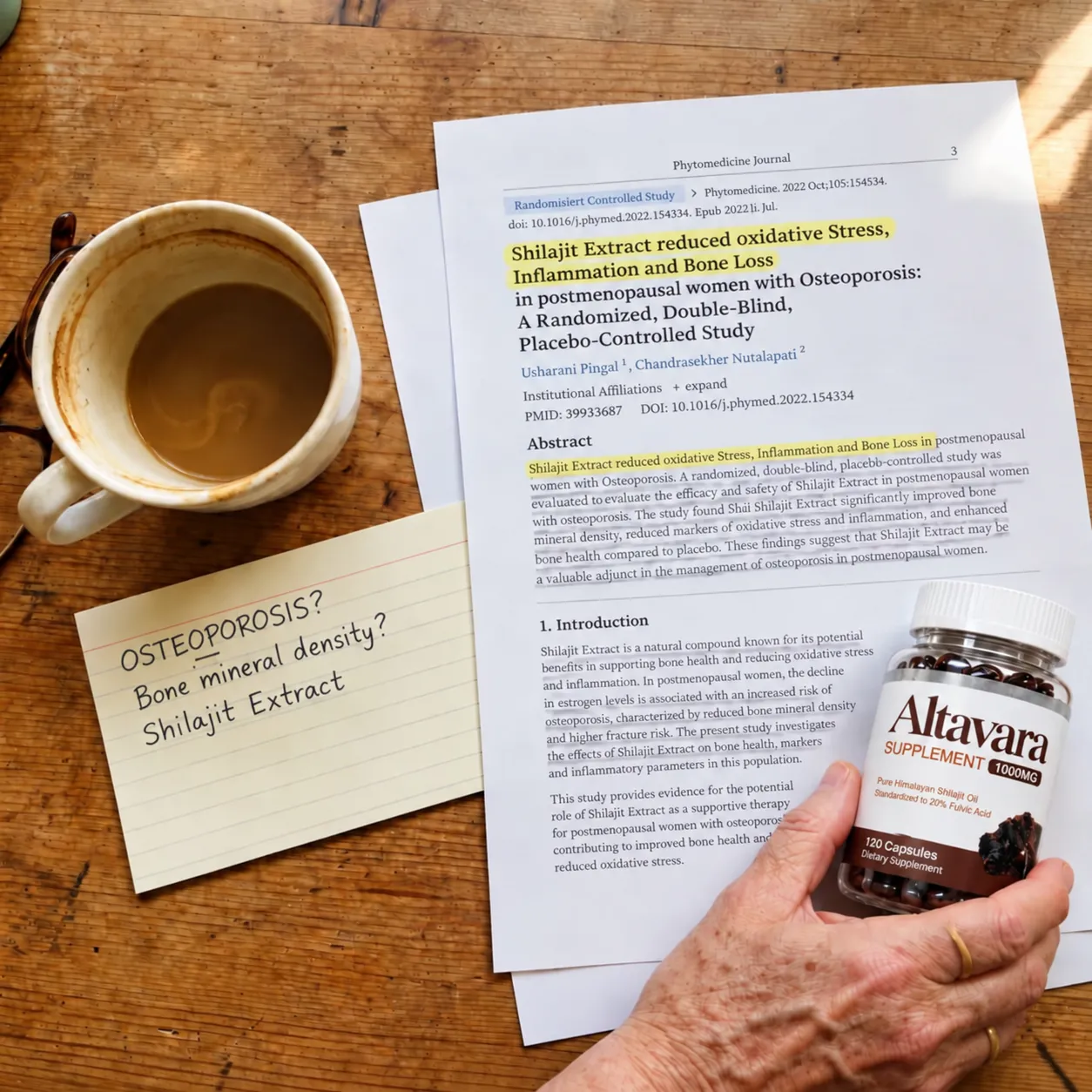
Peer-reviewed study. Published, but not part of standard medical practice.
Bone tissue is constantly being broken down and rebuilt. Cells called osteoclasts break down old bone tissue. Cells called osteoblasts build new bone tissue to replace it. When we're young, these two processes stay in balance, and the bones renew themselves roughly every ten years.
Oestrogen is the central regulator of this entire process. It signals the osteoclasts when to stop, stimulates the osteoblasts to keep building bone, and directs both cell types to where they should deposit calcium.
After the menopause, this regulator drops out. Osteoclasts break down bone faster and faster while osteoblast activity declines. The calcium you take every morning effectively lands on a building site with no plans and no site manager, and burdens your arteries and joints unchecked. It isn't a calcium deficiency but an oestrogen deficiency masquerading as a calcium deficiency.
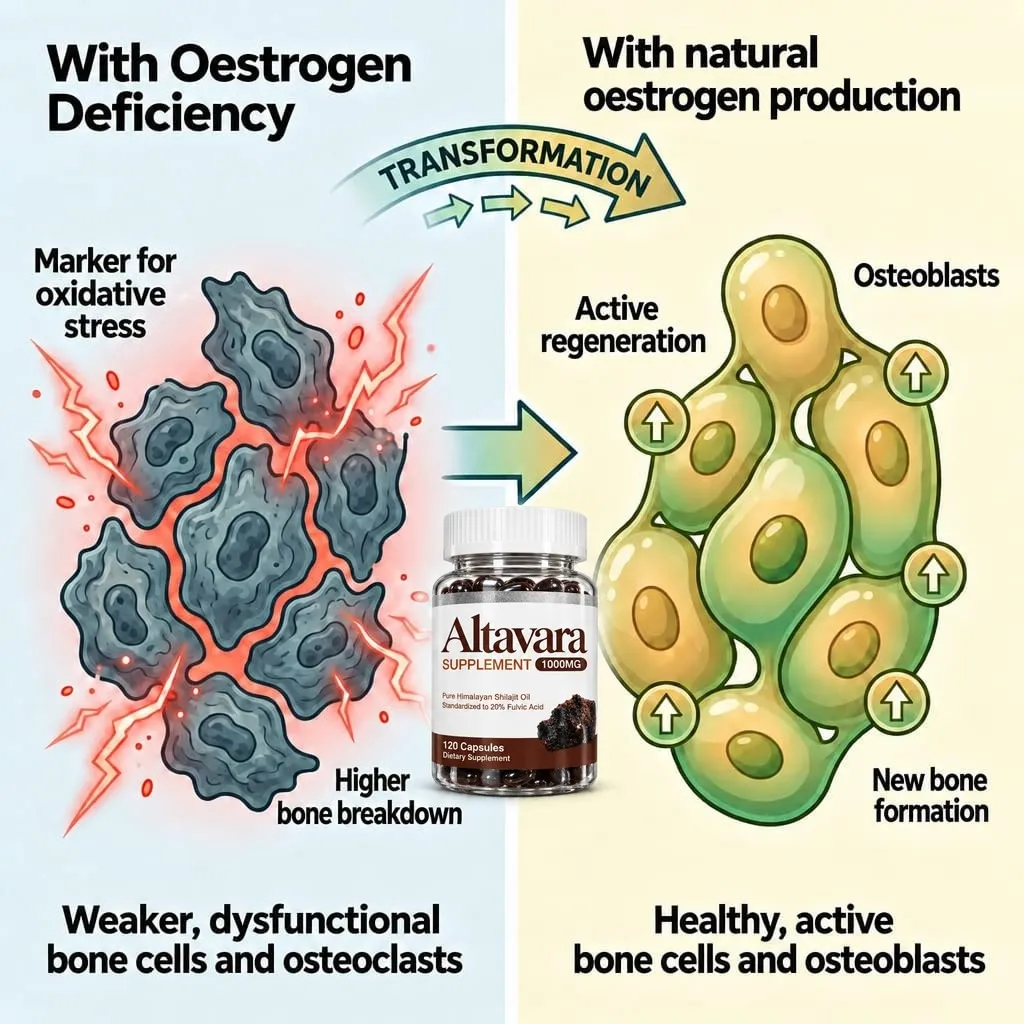
Left: oestrogen deficiency: uncontrolled bone loss. Right: restored signalling: balanced bone remodelling.
That's the first question most women ask when they hear the word oestrogen. And rightly so. My sister had oestrogen-receptor-positive breast cancer, so I didn't want to use anything containing oestrogen without being absolutely sure first.
However, there is a study in which researchers tested shilajit directly on MCF-7 cells. These are oestrogen-receptor-positive breast cancer cells commonly used in research. The study found that shilajit triggered programmed cell death in cancer cells while healthy cells were left unharmed. I had to read it three times. It is a published, peer-reviewed study that is publicly available.
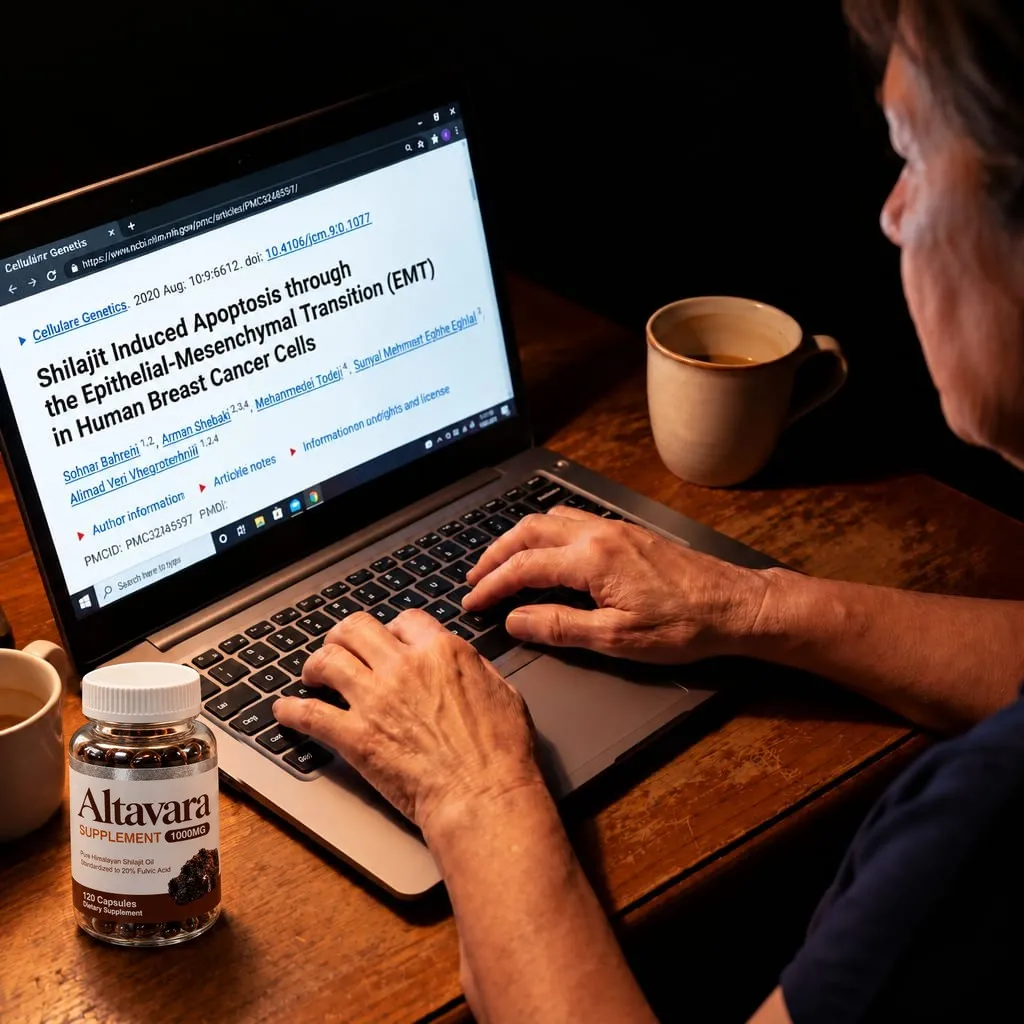
MCF-7 study. A substance that restores the body's own oestrogen signalling, yet kills oestrogen-receptor-positive cancer cells.
Mary said only three things mattered: purified resin, not powder, because grinding it into powder destroys most of the fulvic acid. At least 80% fulvic acid, because that was the proportion used in clinical studies. And heavy-metal testing by an independent laboratory, because it is collected in the mountains and untested resin can contain lead or arsenic.
Like many others, I looked on the big online marketplaces first. Powder capsules with 15 - 20% fulvic acid. Brands I had never heard of. No lab tests. Most products met none of Mary's three criteria.
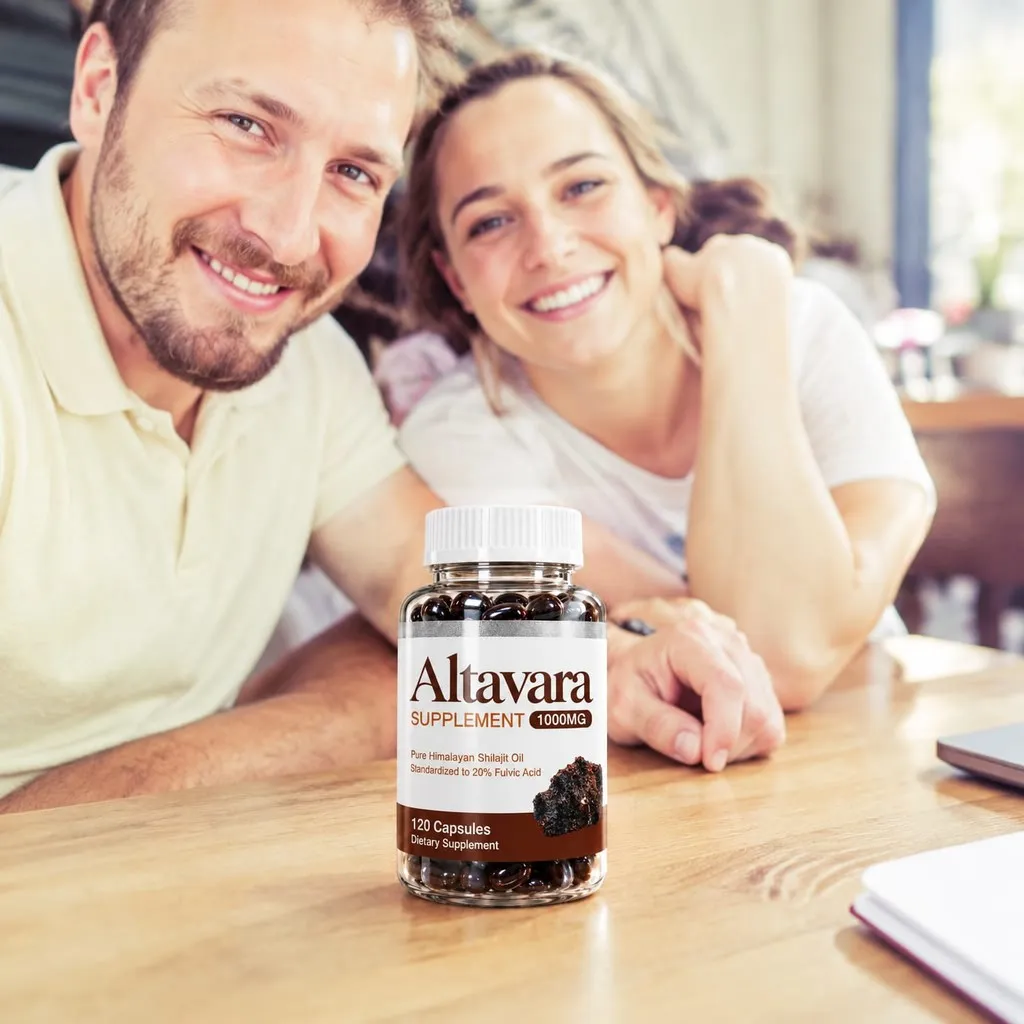
Then I discovered Altavara. 89% fulvic acid. Purified resin in capsule form. Independently tested for heavy metals and mycotoxins, with the results available directly on the website. Small capsules instead of huge calcium tablets.
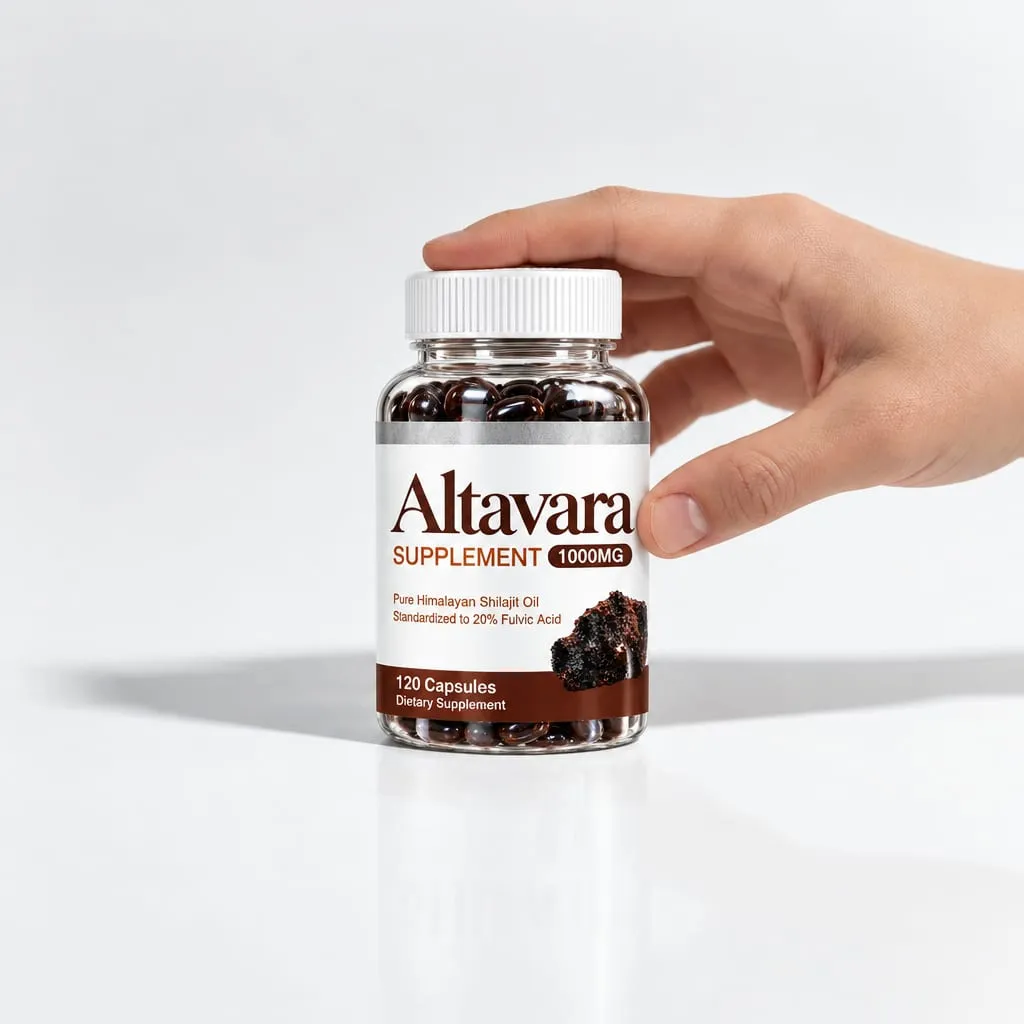
Purified resin, 89% fulvic acid, independently tested. The three things that really matter, according to Mary.
The published studies used purified resin with a high fulvic acid content - not powder.
If a product is powder, has a low fulvic acid content or hasn't been tested, it doesn't match the preparation used in the studies.
I carried on taking all my other supplements: calcium, vitamin D3 and vitamin K2. Now I understood what they were: building blocks. They had never been the problem. I had finally found the missing piece of the puzzle that lets them work.
In the first week, nothing happened. I was ready to send the product back.
In the third month, my grandson asked me to sit on the floor with him and build with blocks, and I did it without a second thought. When we had finished, I got straight up on my own. I didn't lean on the coffee table or count to three first. Two years ago I would have made up an excuse and told myself off.
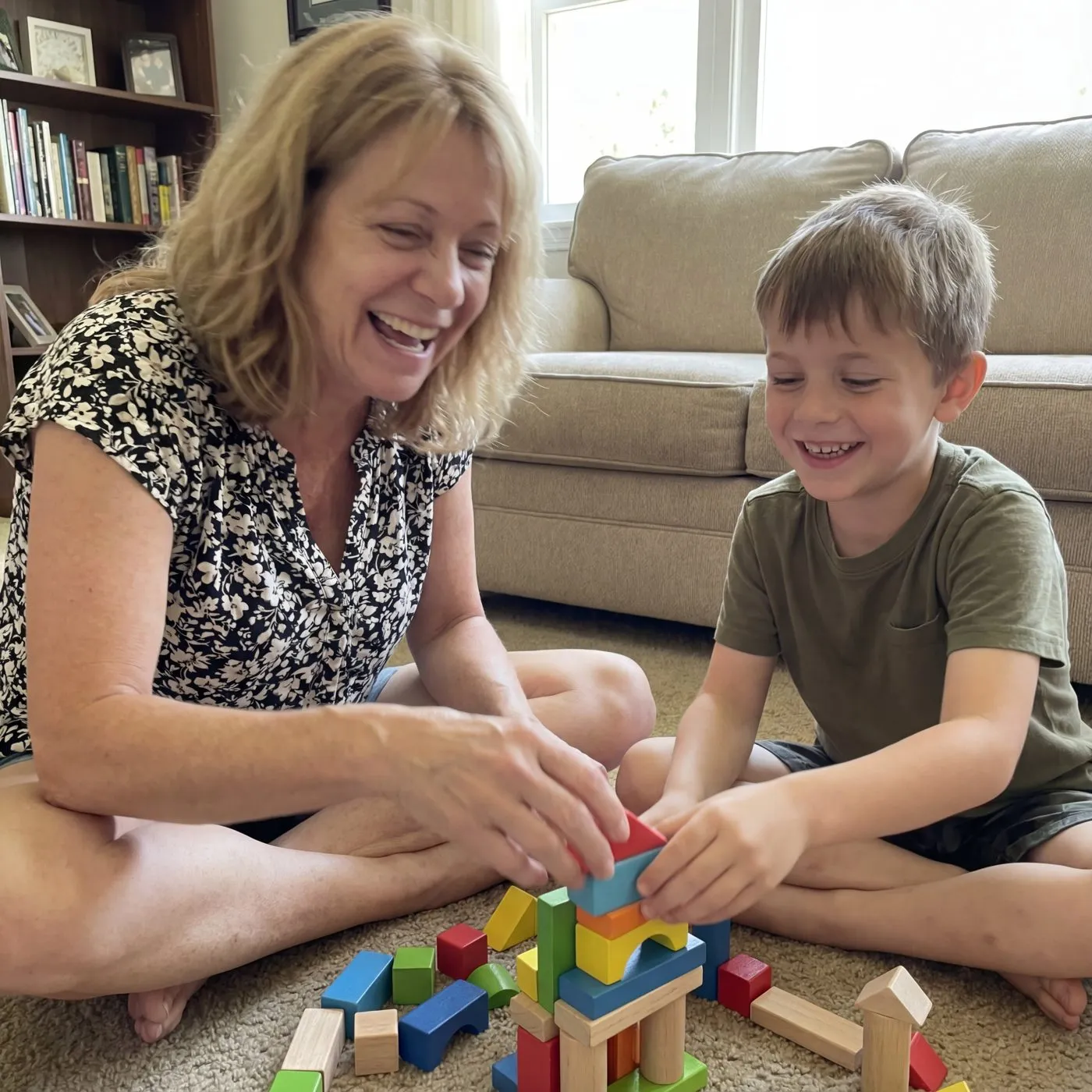
Month three, down on the floor with my grandson.
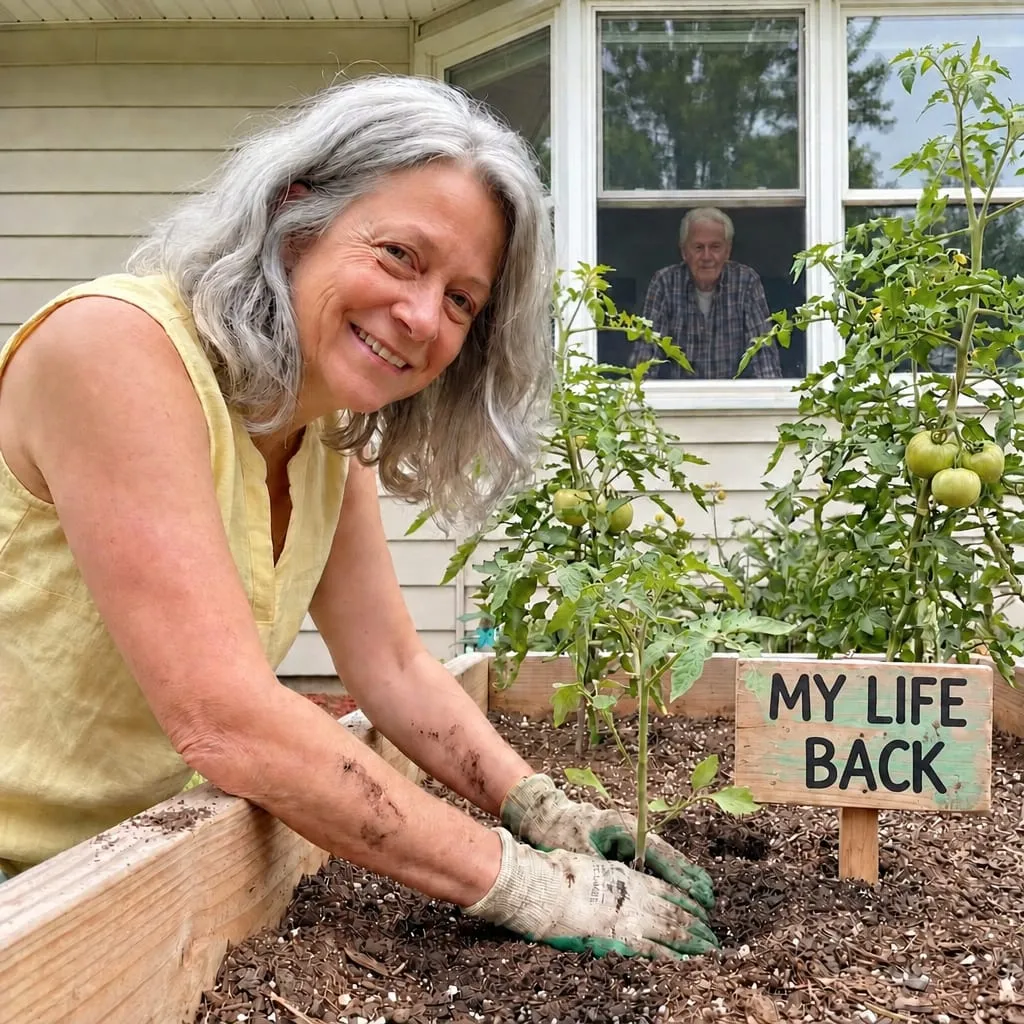
Month five. Four hours in the garden. My life back in my own hands.
When I went for my six-month DEXA follow-up, my endocrinologist first opened my original images, then the new ones, and then the originals again.
"This is remarkable," he said. "Your bone density has increased. What has changed?"
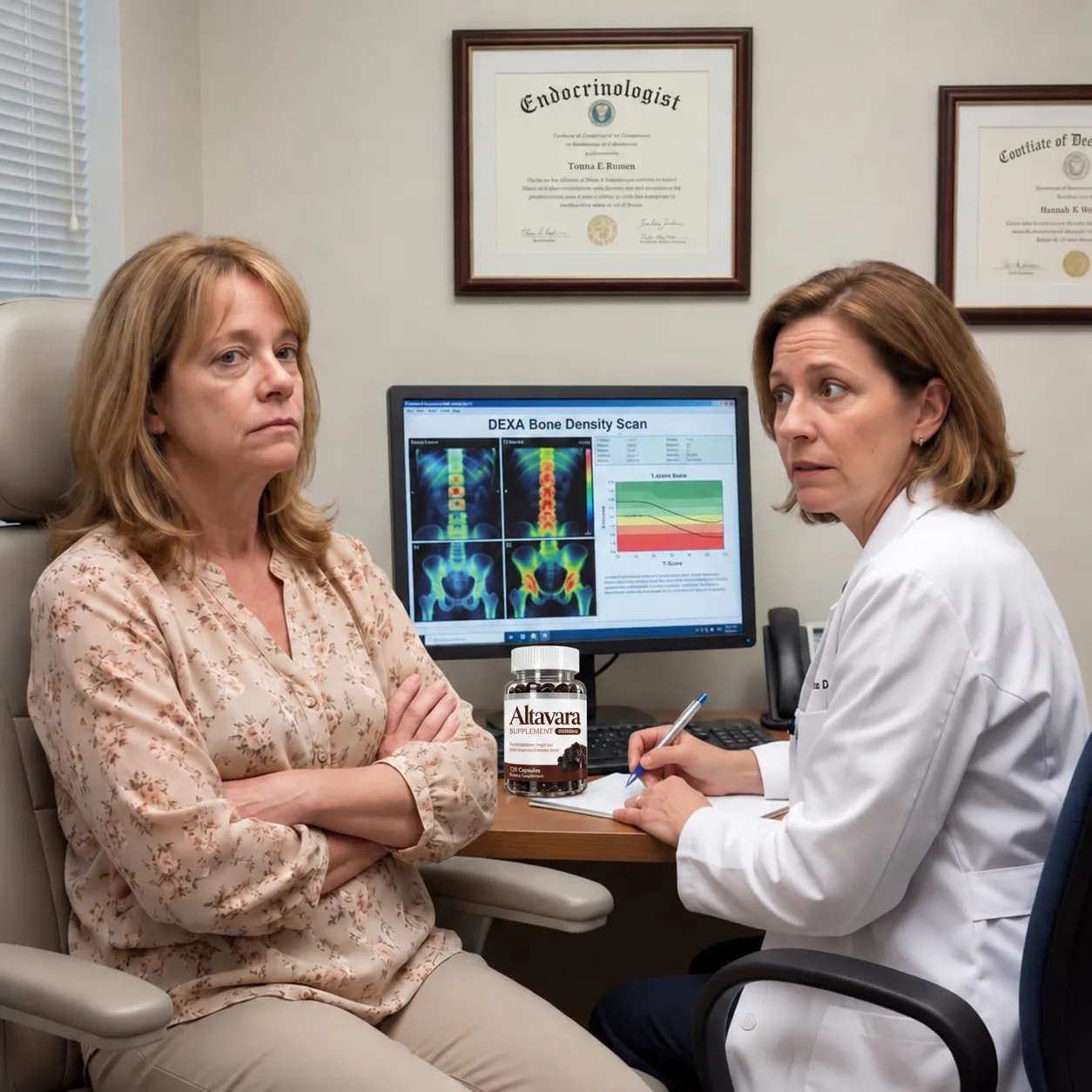
A six-month DEXA follow-up scan made her endocrinologist stop and ask what had changed.
"Why did nobody tell me this before?" I asked.
"Calcium and vitamin D are part of standard treatment. Hormone replacement therapy is considered for those for whom the associated risks are acceptable."
The usual care routine was threatening to rob me of my independence. My future with my grandson. The fifteen good years I thought I still had.
Either you're happy with the result or you get your money back. No ifs, no buts.
Here is what Mary explained: your bones don't need more calcium. They need the signal from oestrogen telling them what to do with the calcium you're already taking.
| Options | Restores oestrogen signalling | No prescription and no stroke risk |
|---|---|---|
| Calcium / D3 / K2 | ✗ | ✓ |
| Algae calcium | ✗ | ✓ |
| Denosumab / alendronate | ✗ | ✗ |
| Hormone replacement therapy (HRT) | ✓ | ✗ |
| Altavara | ✓ | ✓ |
Calcium, vitamin D and algae calcium
Hormone replacement therapy
What they don't tell you about "normal ageing"
Bone loss after the menopause isn't inevitable. It only feels inevitable because for thirty years the only advice we were given was to take more calcium. But calcium was never the problem - oestrogen was.
The stairs you climbed one step at a time. The things you put down to age. None of it had to be permanent.
Last week my daughter asked whether I'd like to go walking with her in the national park. The path to the viewpoint we always used to walk before Mum fell ill. Two years ago I would have said no. This time I said yes. We walked about three miles and I didn't have to stop once.

The viewpoint we used to walk to before Mum fell ill. Nearly three miles uphill, and I didn't stop once.
"So was I," I said. But that's not how it's going.
All in eight months. From being afraid of stairs to planning walking trips with my daughter.
Women aged 45 and over who are no longer afraid of their next bone density scan.
"My T-score improved from −2.6 to −2.1 in seven months. My doctor asked me what had changed. I'm 63."
"I'd stopped making plans more than six months ahead because I didn't know whether I'd be able to follow through. Now I'm booking a trip to Italy. The fear is gone."
"Eight months ago I couldn't even sit on the floor with my grandchildren. Last week I played building blocks with them for an hour. This has given me my life back."
These are public comments from women on social media. Nobody was asked to write them and nobody was paid for them. They are reproduced here exactly as they were posted, including the names.
Altavara is available exclusively through the official website. Every batch contains purified resin with a fulvic acid content of 89% and is independently tested for heavy metals and mycotoxins. The product is not sold on online marketplaces or by high-street retailers, because the manufacturer cannot control product quality through those sales channels.
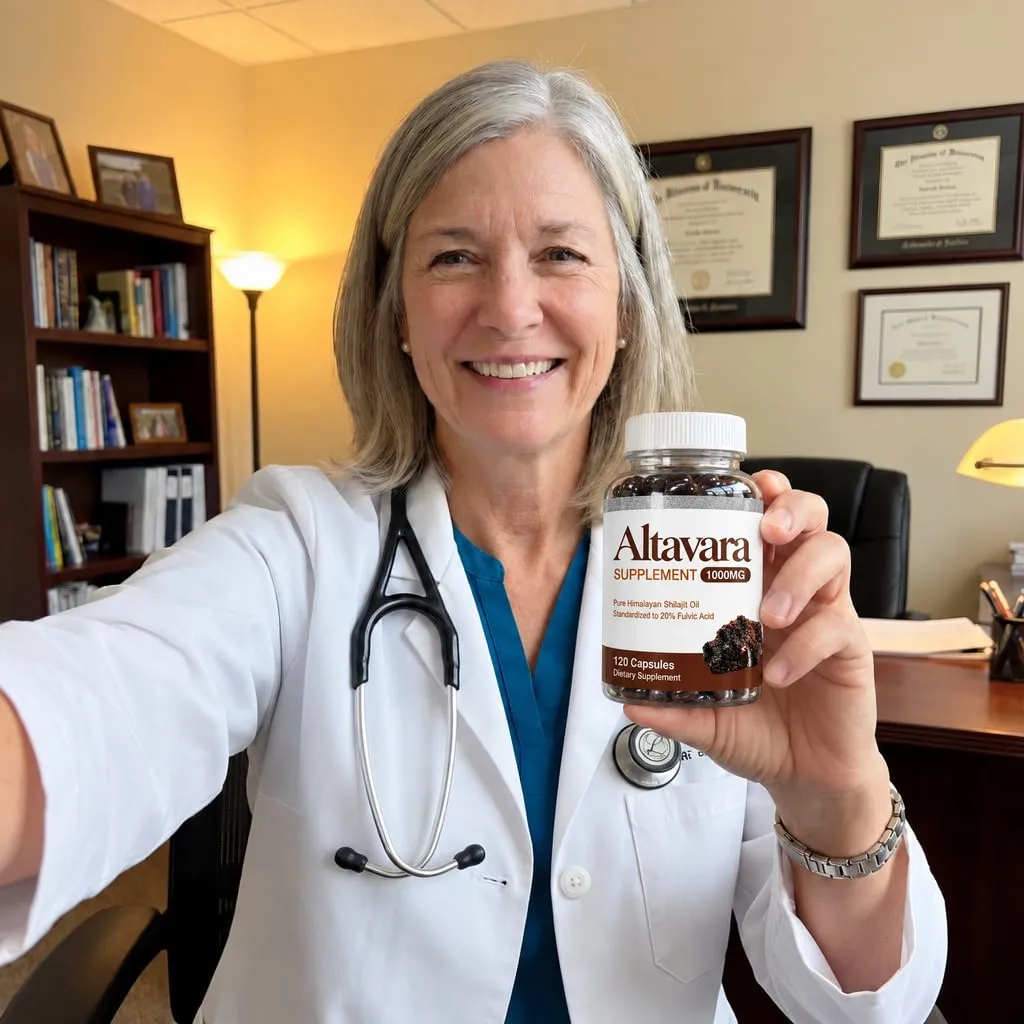
Purified resin with 89% fulvic acid content, independently tested for heavy metals and mycotoxins. Only available on the official website.
★★★★★ 4.9 Dr Nicola Vaughan, MD
Every batch is checked by two independent testing panels
Family business • For customers in the UK
Secure payment. Your data will never be sold on.
Trusted by 2,247 women aged 45 and over
Comments

Emily Saunders
Can anyone vouch for this product?
Like · Reply · 👍 4 · 39 min
Lily Roberts
This has worked wonders for me! I'm so glad I found it
Like · Reply · 👍 10 · 16 min
Megan Hughes
I bought mine at full price and now there's 50% off?
Like · Reply · 👍 22 · 33 min
Charlotte Bennett
My sister told me about this product (thanks, sis!!), and it works!
Like · Reply · 👍 47 · 11 min

Amelia Shaw
Hooked for life - I've put two more aside!
Like · Reply · 👍 30 · 14 min

Mia Parsons
Has anyone bought it? Is it easy to take?
Like · Reply · 👍 10 · 10 min
Hannah Harris
Very easy, I take one with breakfast. Worth it.
Like · Reply · 👍 9 · 8 min
Paula Lawrence
I've just ordered mine! I can't wait to try it!!
Like · Reply · 👍 5 · 2 min
© Wellavique 2026. All rights reserved.
Susan Walker
I've been taking this for about six months now. This week I had my bone density scan and was pleasantly surprised: my results have genuinely improved! Two years ago I was diagnosed with osteoporosis, but this time only osteopenia. For me that's proof enough - I'll definitely keep taking the supplement and hope for further progress. I'm also keeping up my strength training and walking a lot.
Margaret Wright
Lucy, I had my P1NP and CTX levels measured at the beginning of August. The results came back after a week and they were already better! I take Altavara and I've also been moving more. If I remember rightly, they said changes take about three months, but for me only six weeks have passed.
Gillian Fisher
I love Altavara! I'm 79 and two years ago I was diagnosed with osteopenia. Of course, I was prescribed calcium. I dropped that and went straight to this Altavara product instead. My results improve with every scan. I'm just so grateful.
Rachel Hopkins
I'd only been taking the product for three months when I recently went for a bone density scan - 2.3 years after my last one. The hip result improved, the worst spot on my spine stayed stable and the best spot improved slightly. I'll definitely keep taking it alongside algae calcium and stay active.
Helen Baker
I take this for osteopenia after breast cancer. I also take letrozole, which is known to cause bone loss, and I wanted to avoid the side effects of medicines like denosumab. My DEXA scan has actually improved. I'm completely convinced!
Irene Shaw
I've only been taking this for a month and the pain has already eased. Just out of curiosity: do you take one or two capsules a day?
Pauline Cook
This really works! The osteoporosis in my hip has improved to osteopenia, and I plan to keep taking this for the rest of my life.
Christine Clarke
This is the best, it really helps me and I've only been taking the capsules for two months. Every morning I take various blood pressure medications, three hours before I take the Altavara capsules. My bone density results have improved and my doctor asked me what I'm doing and advised me to carry on exactly as I am. The capsules are brilliant. Thank you so much!
Karen Bell
I've been using this for about six weeks for a broken collarbone. It hadn't healed at all in the eight weeks before that. I'm also taking vitamin D3 with it and lo and behold: at the six-week check-up the fracture had completely knitted together. I couldn't be happier about this huge success!
Brenda Sharp
I took this for five months. It was only when I ran out that I noticed how much it had helped with my joint stiffness. I've already reordered and I can't wait to start taking it again.
Helen Baker
My DEXA scan result was better after taking it, even though I'm on letrozole…