
I watched a patient's injections stop working, and lose her sight anyway. Then I discovered the tests her ophthalmologist had never seen.

I am about to upset every ophthalmologist, every local optometrist, and every medical rep who has ever sold an eye vitamin.
What I am about to reveal could cost me my professional reputation, my consulting assignments, and what little credibility I have left in ophthalmology circles.
I don't care anymore.
For nearly twenty years, I sat in the same offices and repeated the same subtle lie to the same terrified patients.
"There isn't really a solution for early macular degeneration, Mrs So-and-so. Take this AREDS2 tablet, come back in six months, and we'll monitor the progress."
I told this lie to a woman named Helen.
It was a Tuesday in October. Late in the evening.
Three grandchildren. She had come two and a half years earlier, terrified, after a routine examination at an optometrist's had detected drusen at the back of her eye.
I had done what I had been taught to do. I had prescribed the standard AREDS2 supplement for her. "Take this, Helen. Come back in six months."
Six months later, her eyesight had worsened.
She had missed the last step of her own staircase and had twisted her wrist.
£3,800 spent chasing a second opinion at a private clinic. £7,300 for a series of injections at a reputable practice in central Manchester, whose specialist later admitted that they "probably didn't do much good."
A surgical consultation for an intervention with a 40% chance of being absolutely useless.
And then this sentence that made me put down my coffee. Helen had sat on the edge of her bed the previous week and said to her daughter:
"I CAN'T TAKE IT ANYMORE. I CAN'T BE THAT PERSON ANYMORE."
I stood there, staring at her file. And something inside me gave way.
I knew the system had betrayed Helen. I knew I had betrayed Helen. So I distanced myself from the rules and started digging. And what I discovered changed everything.
If you are reading this because the optometrist, during your last examination, told you that you had "early changes" in the back of your eye…
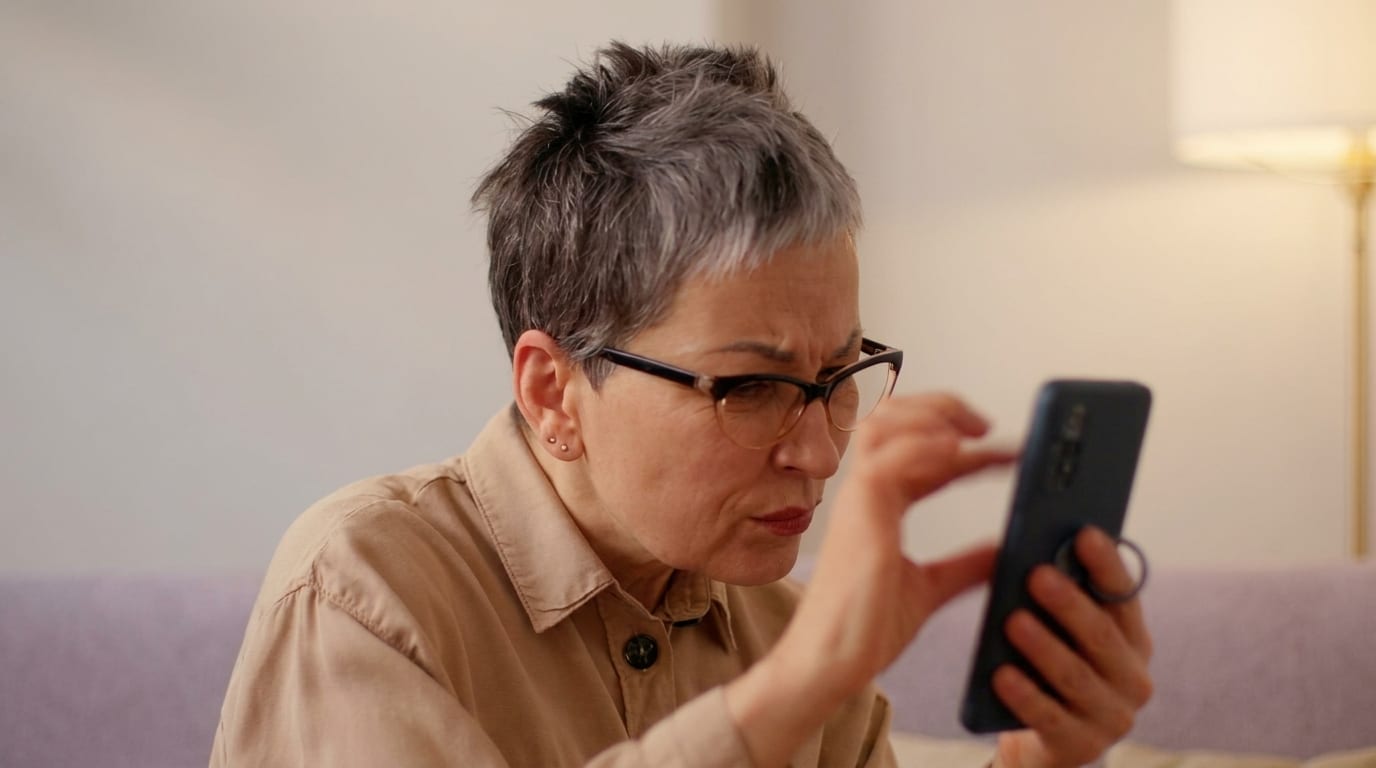
If you discreetly squint at the menu at a restaurant, pretending you can read it…
If you stopped driving at dusk, telling your family it was the headlights, when in reality it was the signs you could no longer see…
The next five minutes may be the most important of your year.
My name is Dr William Harrington
I have spent the last eighteen years as a GP here in Manchester, watching my patients quietly lose their independence to the same tired script: "there isn't really a solution, let's just keep monitoring it."
Find the answers that the dietary supplement industry and pharmaceutical companies will never look for. Because they make their money by keeping you sick.
But first, let me tell you about the night that changed everything…
The night everything changed
When I read the note from Helen's daughter, I called the office and spoke to Helen the next morning.
She told me that she had completely given up driving.
She had stopped going to her book club because she could no longer decipher the printed characters.
She had stopped picking up her grandchildren from school because she no longer trusted herself to drive for school runs.
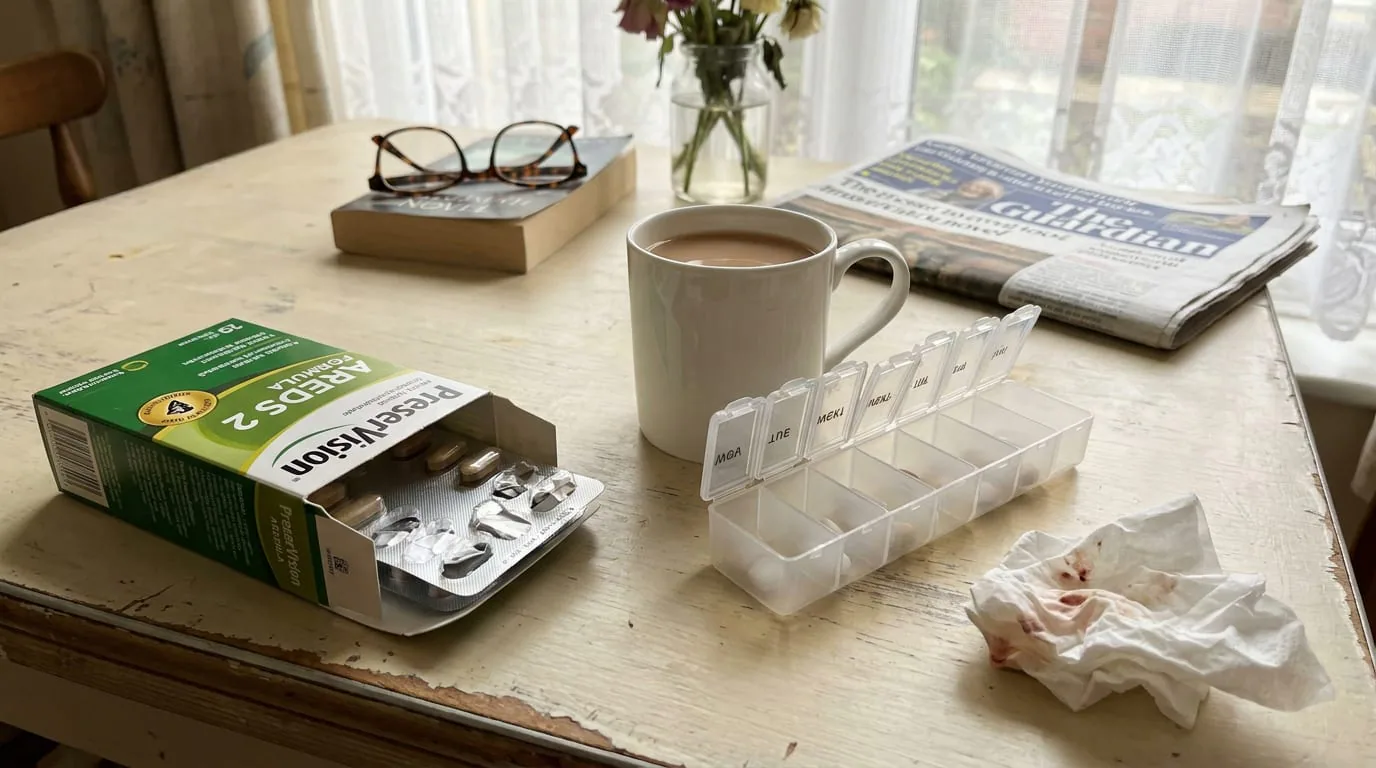
She told me she had been taking AREDS2 tablets every day for two and a half years. Religiously. Exactly as I had recommended.
She also told me, and this is the part that devastated me, that for the past six months she had been having nosebleeds three or four times a week.
Her stomach was in knots.
I remained seated at my desk, staring at the wall.
Two and a half years.
And she had nosebleeds three times a week.
Something inside me gave way.
The obsession that followed
For the next four months, I lived like a possessed man.
I combed through every clinical article I could find on lutein, the active carotenoid supposed to do the real work inside an AREDS2 tablet. Leading US research centres. Major European universities.
Vision research archives. A prominent European medical university. A respected research team in Japan.
I spent over £19,200 of my own money on access fees, translations, and reproduction orders. My wife thought I had definitely lost my mind.
And then I found an article, published in a peer-reviewed nutrition science journal in 2025, which sincerely made me want to punch my screen.It stated unequivocally that less than 10% of dietary lutein is absorbed by the human body. Less than 10%. Regardless of the source. Including the tablet I had been distributing for eighteen years.
The entire United Kingdom ophthalmic supplement industry is based on a lie.
A £870 million lie that keeps you scared, dependent, and with your credit card in hand.
Here's what they don't want you to know:
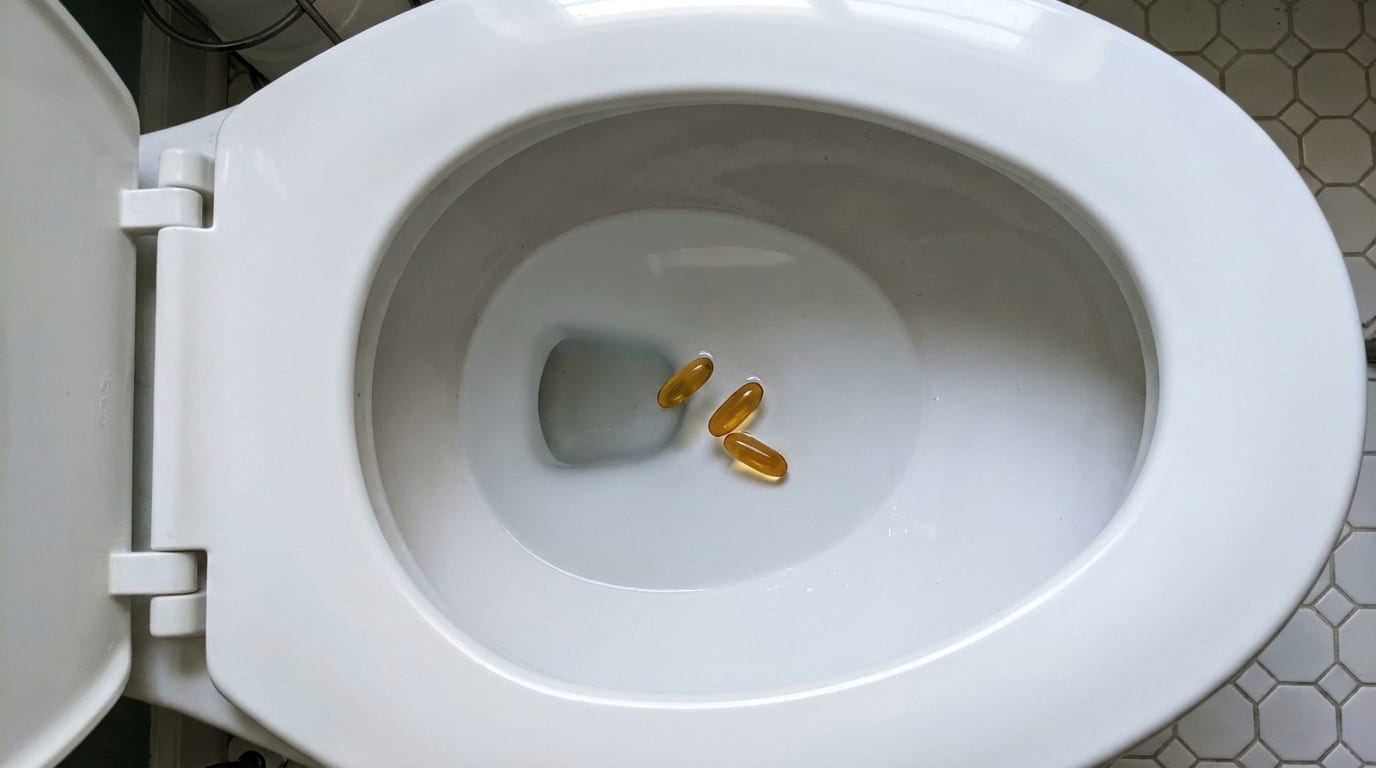
The pill you swallow every morning releases more than 90% of its lutein into your toilet, not into your eyes.
Lutein is a waxy molecule that hates water. Your gut wasn't designed to absorb it. And as you age, your gut absorbs less and less of everything.
This is not a fringe theory.
The true underlying cause of age-related visual decline

Imagine the macula, at the back of your eye, as a small, bright area of yellow pigment, roughly the size of a pinhead.
This yellow colour is lutein. It's the natural sunscreen that covers the most precious 1% of your retina, the part that allows you to read, drive, recognise a face across a room, and see the colour of your grandchild's eyes.
This yellow area is supposed to be dense. Saturated. Almost golden.
In most British adults over 55, it isn't. It's pale. Discoloured. Thin. Like a lawn that hasn't been watered for two summers.
The macula is, literally, starved for lutein.
This is what I now call "macular famine," and it's the real reason why your eyesight is declining even though you're doing everything you've been told to do.
You eat your kale. You take your pill. You go for your check-ups every six months at the optometrist's. And yet the yellowing at the back of your eye continues to fade.
Because the lutein you swallow doesn't reach it.
That's why the feeling of confusion is what it is…
The grey that spreads across the restaurant menu in the dim light…
Faces that become slightly blurry during a Sunday roast…
Road signs that look sharp in daylight but resemble smudged ink stamps as soon as it gets dark.
It's the sound of a yellow garden withering away, behind a locked gate.
The science behind this isn't even hidden.
Researchers at a leading US eye institute have been writing for years about macular pigment and visual function.But here is the truth that no one at the top of British ophthalmology will tell you openly.
There is no money to be made by properly correcting macular famine.
You can't patent a marigold flower.
You can't charge £3,800 for a spray mist.
You can't land a £288,000 anti-VEGF injection contract based on something a patient makes on her own on her bathroom shelf.So we keep you on the same hamster wheel.
Vague diagnosis → AREDS2 tablet that does not reach the eye → "We will simply monitor" → injections in due course → referrals for surgery in due course → and we start again.
That's genius, truly. Provided you're a sociopath who sees human suffering as a source of income.
The back door that had been hidden from the beginning
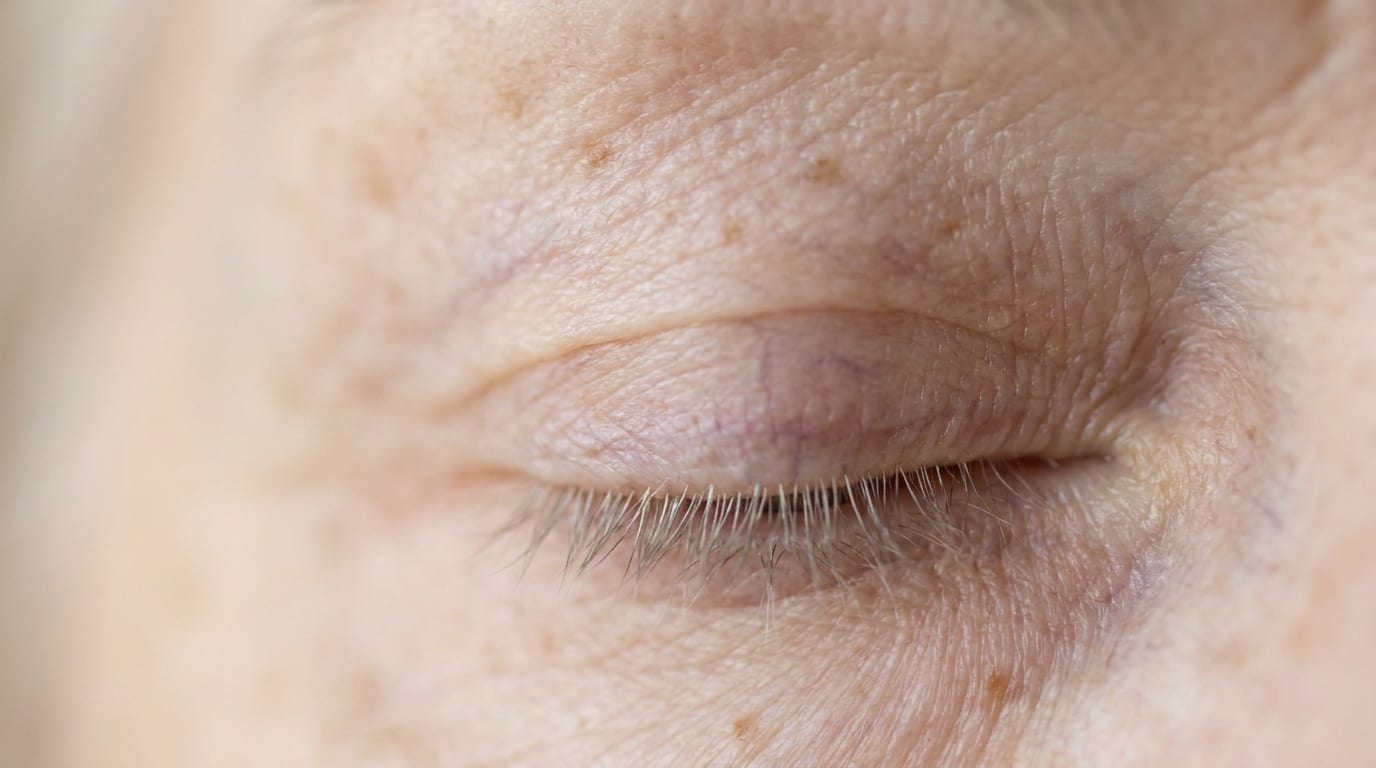
While I was immersed in Japanese research on transdermal absorption, I came across something that I had never been taught in medical school.The skin of the human eyelid is 2.4 to 3.2 times more permeable than that of your belly, according to research published in a peer-reviewed drug delivery journal in 2019.
And the conjunctiva, that pink, flexible tissue that lines the inside of your eyelid, is up to 30 times more permeable to active compounds than the cornea itself, according to peer-reviewed research from 2000 and 2018.
❌ In short: nature has created a flexible, thin, and absorbent door leading directly to the back of your eye. And no one in traditional ophthalmology has ever told you it existed.
Two thin tissues. Both designed by three million years of evolution to absorb. Both pressed against the ocular environment of your retina.
This is the shortest distance between the outside world and your macula that does not involve a needle.
A nicotine patch uses the same principle to deliver nicotine into your bloodstream through the skin of your arm. A hormone replacement therapy patch does the same with oestrogen.
A scopolamine patch behind the ear has long been used by sailors to prevent seasickness.
The transdermal route is not new. It is not marginal. It is one of the most proven delivery systems in modern medicine.
It had simply never been applied correctly to the macula until now.
The three elements you need, all at the same time
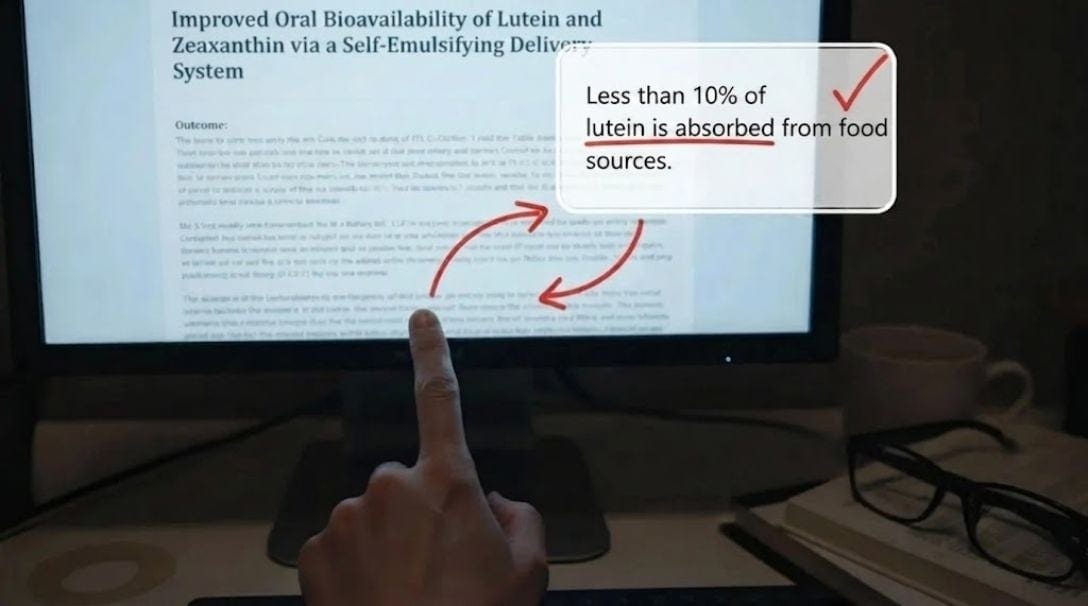
After four months spent immersing myself in research, I had reduced the whole problem to a simple framework.
If you really want to support the yellow pigment at the back of your eye correctly, you need to do three things at the same time:
That's why eye drops don't work. They only treat the surface of the eye, not the macula.
That's why kale doesn't work. The lutein is trapped in the plant's matrix, and you'd have to eat an entire paddock of it to break through the absorption barrier.
You need all three. At the same time. In the right order.
A true direct replenishment via the eyelid.
And that's exactly what the small team I eventually found in Cambridge had discreetly developed.
When you cross a £870 million industry, it comes back at you
1
Bypass the intestines.
2
Apply through the eyelid.
3
Protect the macula from within.
If you forget even one of these three elements, you are wasting your time.
That's why eye drops don't work.
That's why kale doesn't work. The lutein is trapped in the plant's matrix, and you'd have to eat an entire paddock of it to break through the absorption barrier.
You need all three. At the same time. In the right order.
A true direct replenishment via the eyelid.
And that's exactly what the small team I eventually found in Cambridge had discreetly developed.
When you cross a £870 million industry, it comes back at you

The first formula I tested in my practice was on a patient named Pauline.
Pauline is 67 years old. A former hospital nurse manager, she spent three decades in a very busy department in Bristol. The kind of woman who has seen it all and is no longer impressed by anything.
She had been taking AREDS2 for four years. She had recently had a panic attack in a supermarket because she couldn't read the labels on the ready meals and was too embarrassed to ask her husband.
I asked her if she would be willing to try something else. She gave me a look. The look of a seasoned nurse from up north.
Then she said, "Go on then. I've got nothing else to try."
Three weeks later, she called my office.
"William. I don't know what you put in that thing. But last night, I drove alone to my granddaughter's Christmas concert, in the dark, and I read the programme without my reading glasses. I sat in the car park afterwards and cried for ten minutes."
That's when I knew.
And that was also the moment when my career, as the institution had built it for me, effectively came to an end.
In the two months following the presentation of my initial results at a small conference in Cambridge, I received:
Two "friendly" warnings from high-ranking colleagues advising me to abandon the subject
A legal letter from a firm representing a major dietary supplement manufacturer
Hushed conversations with two medical reps that concluded with these words: "William, you're going to regret this."They wanted to silence me because I had associated my name with something that could make their entire business model obsolete.
A simple mist spray that:
✅ Targeted the root cause of age-related visual decline, not the symptoms.
✅ Cost less than a single private consultation.
✅ Allowed people to use it themselves at home, without appointments, without waiting lists, without Eylea injections.
But here's what those vultures hadn't foreseen.
Not on anyone's payroll.
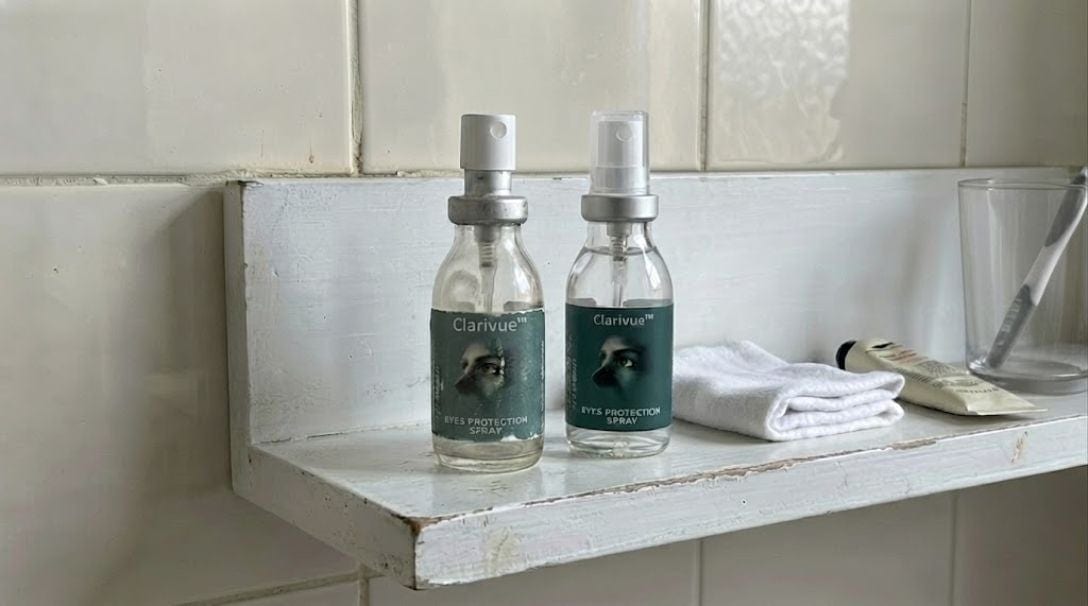
Together, we had transformed the science from those Japanese and American articles into something any 70-year-old woman in the United Kingdom could use on her own bathroom shelf.
The brand to which I now refer all my patients

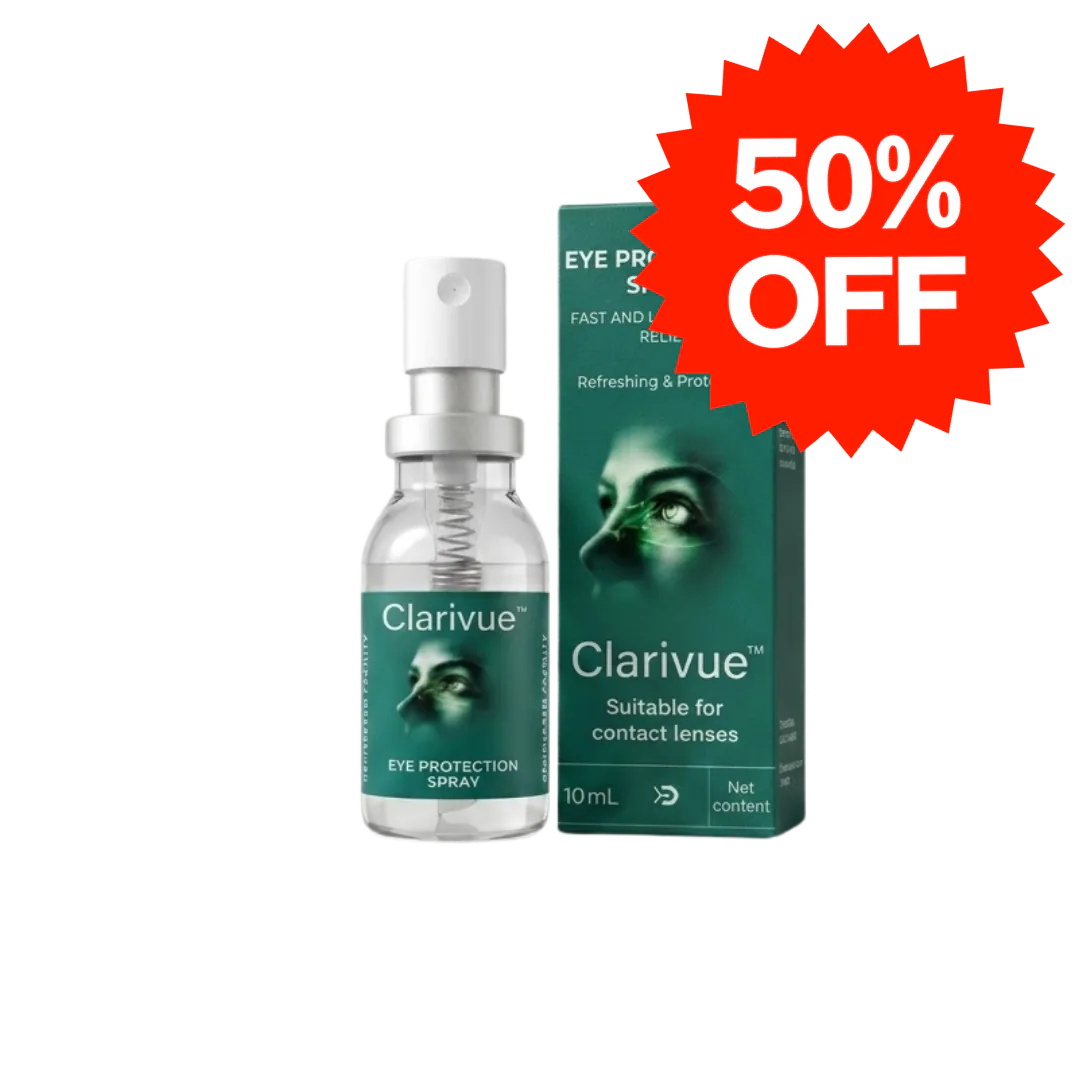
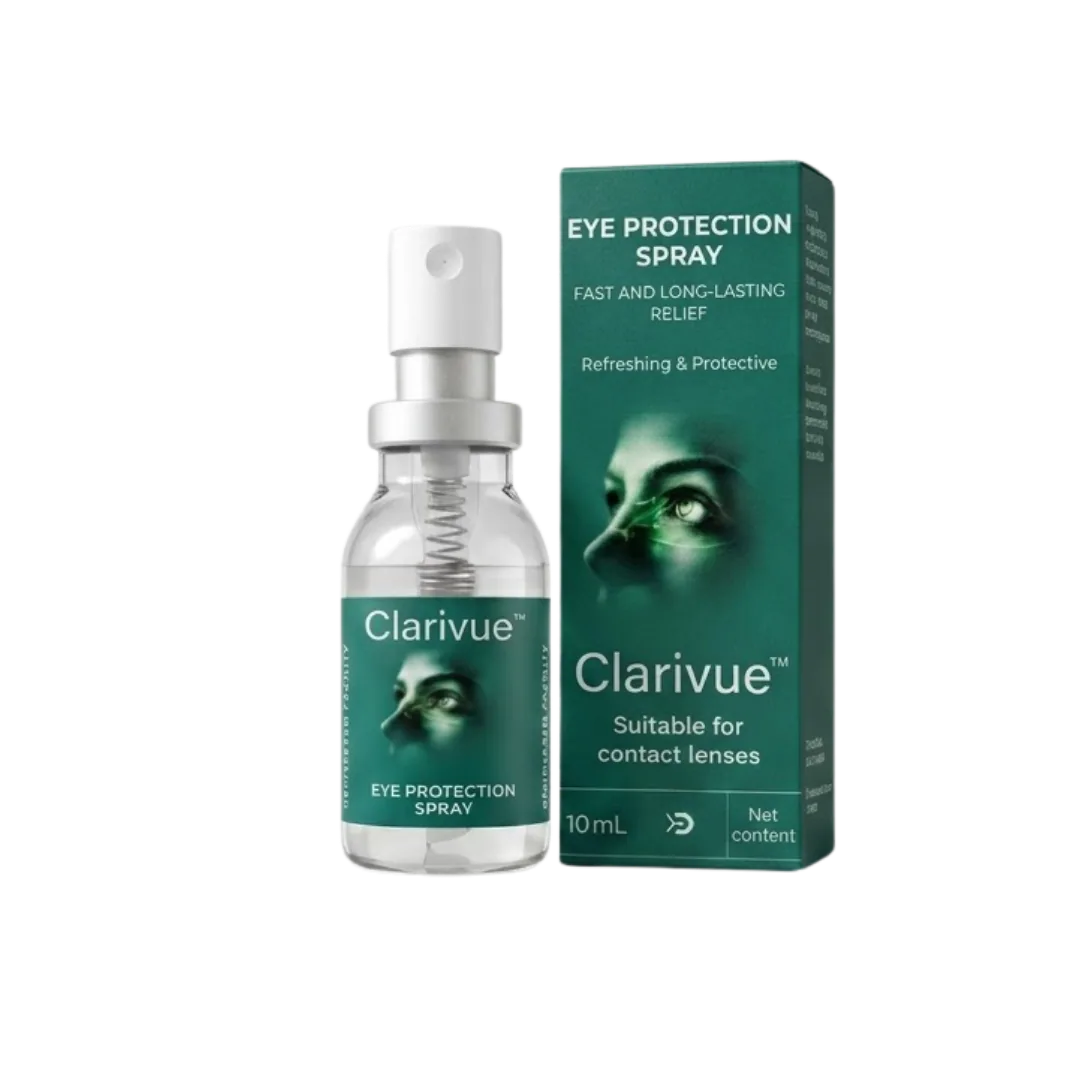
Its name is Clarivue .
I didn't design it. I didn't formulate it. I don't own any shares in the company.
This is the work of a small team of biochemists and formulators based near Cambridge. They had been working discreetly on this project for almost seven years before I heard about them.
When I finally found them and tested their formula on Pauline, I knew immediately.
Because Clarivue is the only topical eye mist I have ever seen, anywhere, that meets all three requirements to support healthy macular function in a single application:
Lutein extract from Calendula officinalis (marigold),
the highest natural concentration of lutein of any flower in the world, 29.8mg per 100g of petal. Applied directly to the eyelid, where the conjunctiva can absorb it.
Topical vitamin E (tocopherol),
a fat-soluble antioxidant that helps protect macular pigment from oxidative damage, without the gastrointestinal risk profile of high-dose oral vitamin E.
The Direct Eyelid Replenishment Diffusion System,
a specially formulated micro-mist, designed to stay on the eyelid skin long enough for the conjunctiva to do its job, then be cleanly absorbed.
All three. Working together. In one bottle.
No appointment with your GP.
No waiting list to see a specialist.
No pills that will tear your stomach apart.
No needle in the eye.
Just your macula, finally receiving what it has been discreetly deprived of all these years:
lutein, properly distributed, to where it is actually supposed to go.
Saturation. Protection. Soothing.
What I learned about the company before sending my patients there

Never. In eighteen years, I have never publicly recommended one.
So before sending even a single patient to Clarivue, I drove out to Cambridge and asked the founder some disturbing questions all afternoon.
Here's what I've learned:


Their lead formulator

Their marigold comes from a single grower in Lincolnshire, harvested at the peak of lutein concentration, and cold-pressed within 48 hours of picking.
No cheap fillers. No artificial preservatives. No common allergens.
Their support team answers
every enquiry personally within hours, and refund requests are processed within 48 hours, I checked, stopwatch in hand.
Their return rate is less than 0.1%.
When I asked the founder how that was even possible, he shrugged and replied, "If it didn't work, we wouldn't have a company."
Listen. I've spent two decades watching supplement manufacturers cut corners on details that would make you sick if you saw the footage shot in the labs.
Those people, no.
That is why I agree to associate my name with theirs.
Here's what happens when you spray it

When you spray Clarivue on your closed eyelid, here's what really happens behind the scenes:
Minutes 0 to 5: the eyelid impregnation phase.
The micro-mist settles on the eyelid skin, the most permeable skin on your face. The lutein from calendula and the topical vitamin E begin to penetrate the outer layer of skin.
Most people feel nothing more than a light, almost imperceptible, cool sensation. This is not a placebo effect. It's the carrier oil penetrating the skin.
Minutes 5 to 30: the conjunctival bridge phase.
Lutein penetrates the conjunctiva, the pink and flexible tissue that lines the inside of your eyelid, which is two to thirty times more absorbent than the cornea.
From there, it has a direct route to the surrounding eye tissues. No stomach acid. No liver. No dilution in the blood. The macula, for the first time in perhaps decades, begins to be nourished.
Days 1 to 8: the macular saturation phase.
Lutein takes approximately four to eight weeks to accumulate in the macular pigment, even when properly diffused.
With each daily application, the yellow in the back of your eye becomes a little denser. A little more saturated. A little more protected.
After eight weeks of regular use, most people have a macula with more pigment than they have had in years.
Not "better for a few hours" like with an eye drop.
Not "masked" as with a magnifying glass or stronger correction.
Actually restocked.
What more than 13,000 British users reported during the first year
I demanded that the company show me its internal figures before writing a single word about them.
Here is what they told me:
Over 92% reported a notable improvement in their daily visual comfort within the first two to four weeks
The majority reported having reduced or eliminated their dependence on a second daily AREDS2 tablet.
A significant number avoided the next round of private clinic consultations they had been silently dreading.
Out of a thousand customers, only one returns the bottle. (And the founder acknowledged that two of these returns last quarter were due to bottles arriving cracked in transit.)

Amanda J.


Verified User
Amanda J.
Verified User
I had given up. I had truly given up. My eye doctor told me, "We'll just keep an eye on it," for the third year in a row, and I left the optician's, sat in my car, and cried. My daughter found this and ordered it for me. After six weeks, I read the parish newsletter without my reading glasses for the first time since 2022. Then I drove to her house alone after dark. She didn't know I'd done it until I walked through her door.

Rob M.
Verified User
Rob M.
Verified User
My wife ordered it. I thought she was wasting her money. I'd been on AREDS2 since 2017, and at my last appointment, the specialist told me the drusen were still there and my vision was continuing to worsen. Two months on the medication, and my ophthalmologist reviewed the exam twice. He told me, "Whatever you do, Rob, keep going." I didn't tell him what it was. He would have just advised me to stop.

Sarah E.
Verified User
Sarah E.
Verified User
I fell on the back step last summer because I couldn't see the difference in level between the terrace and the back. That's where my son sat me down and ordered this for me. I'm not usually one to write reviews. But yesterday, I drove to Harrogate and back in the rain. So here goes.
What vision correction really costs in the United Kingdom
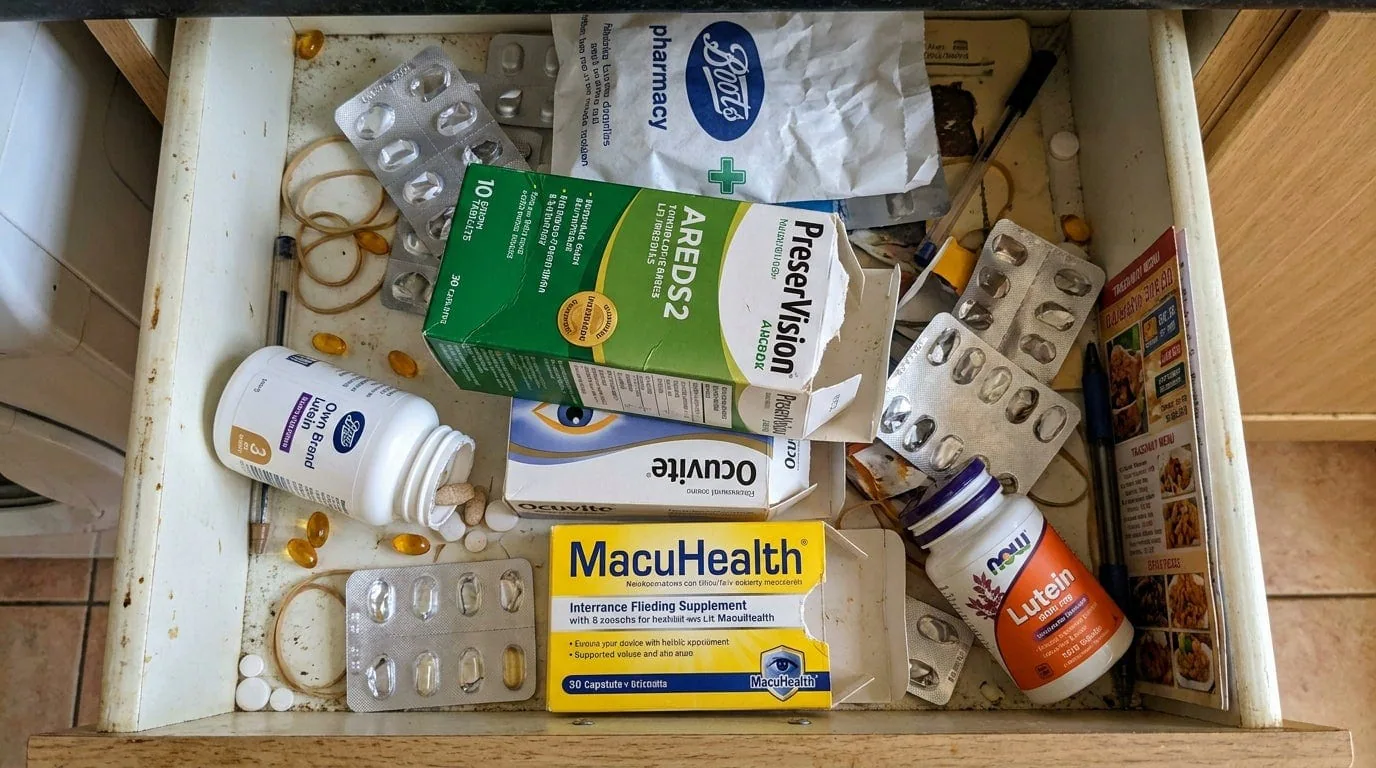
Let me show you what it really costs to treat age-related visual decline in the United Kingdom.
The private consultation route:
Initial ophthalmology consultation in the private sector: £500–£940
Control imaging: £380–£730
Follow-up consultations every six months, indefinitely: £500–£940 each
Annual cost: approximately £1,920–£3,840
Added to that is the travel time. And the wasted time. And the dignity of hearing once again: "We'll just keep an eye on things."
The injection route:
Intravitreal anti-VEGF injections in the private sector: £1,920 – £3,120 per eye, per injection
Typical treatment: 8 to 12 injections in the first year
Median number of injections over three years: 18 injections
Reported pain lasting up to 36 hours per injection, disrupting sleep and recovery, according to a 2023 peer-reviewed study
The endless wheel of add-ons:
AREDS2 at the usual price in UK pharmacies: approximately £54–£72 per month, indefinitely
Cost over ten years: £6,360–£8,880
Cost in side effects: nausea, nosebleeds, digestive problems, blurred vision caused by the supplement itself
Cost in terms of eye health outcomes: as peer-reviewed data on absorption show, less than 10% of what you swallow actually reaches your bloodstream
It's a goldmine built on the declining eyesight of British retirees. And here's what annoys them most of all…

The offer I convinced them to give my readers
Clarivue is expected to cost a small fortune.
Comparable topical formulations of medical quality sell for several hundred pounds per bottle in private clinics, and, honestly, considering the seven years of research and the care cultivated in Cambridge, this is a justified selling price.
So I called the founder. I told him bluntly: "My readers are people like Helen. Like Pauline. They've already spent thousands of pounds on injections and pills that haven't helped them. If you want me to associate my name with your product, you'll give them a discount. A real one."
He resisted. I insisted more.
In the end, he agreed to give my readers a deal you won't find anywhere else on the internet, but only through this page, and only for one day at a time.
His finance department, by his own admission, was furious. So much the better.
I'm not going to give you the exact figure here.
You will see the real number on the next page when you click.
For the only topical mist in the country built around the actual science of how the macula absorbs lutein.
You are at a crossroads.

Right now, you are at a crossroads.
Path #1: Keep doing what you've always done.
Path #2: Try something built on the real science of how the eye absorbs nutrients.
The choice seems quite obvious to me.
Here's exactly what you need to do now
Either you continue doing the same thing hoping that your case will be the exception… or you make the sensible decision to actually try something based on a different mechanism, and give yourself at least a real chance of turning things around in the coming weeks.
Remember, you have nothing to lose.

With hope, Dr William Harrington
P.S. Helen, yes, that Helen, sent me a photograph last month. She had driven alone to Cambridge to meet her daughter and grandchildren for a day out. The first time she had driven further than the village shop in almost two years. That could be you in 7 months. But only if you act tonight, the discount window the brand has granted my readers closes at midnight.P.S.
P.S. Seriously, the discount window the brand gave my readers closes tonight at midnight. Tomorrow, this page will show the regular price,

By Dave Mitchell
18.03.2026, 09:56

UPDATE:
UPDATE:





Margot Holloway
Been struggling with blurry vision for years and honestly just accepted it was part of getting older. Started Clarivue three weeks ago and wasn't expecting much. Looked out the window this morning and the hedgerows across the road were sharper than they've been in years. My husband noticed I'd stopped squinting before I even said anything.
Like · Comment ·

14 · 25 May 2026
Like · Comment ·
4 · 50 min
Like · Comment ·
14 · 25 May 2026

Yvonne Parrish
Spent a fortune on eye drops and supplements over the years, nothing ever made a real difference. Three weeks on Clarivue and the hazy film I'd had over everything has genuinely started lifting. The glare from headlights at night that was doing my head in has almost completely gone. Wish I'd stopped wasting money on the others sooner.
Like · Comment ·
21 ·
Like · Comment ·
4 · 50 min
Like · Comment ·
21 · 25 May 2026

Robert Baines
Put off trying this for months, mostly out of stubbornness. What finally changed things was a routine eye test where the optometrist commented my scans looked steadier than the year before. Nothing dramatic, just quietly relieved.
Like · Comment ·
11 ·
Like · Comment ·
4 · 50 min
Like · Comment ·
11 · 24 May 2026

Anne Watson
Has anyone used this alongside their regular eye drops? Been dealing with central vision loss for two years and thinking of giving Clarivue a proper go.
Like · Comment ·
4 ·
Like · Comment ·
4 · 50 min
Like · Comment ·
4 · 24 May 2026

Di Hartley
Anne, yes, that's exactly what I do. Still use my regular drops separately, just added Clarivue to my morning routine. The blurriness started easing within the first two weeks and the night glare is so much better now. Genuinely worth it.
Like · Comment ·
11 ·
Like · Comment ·
3 · 50 min
Like · Comment ·
11 · 24 May 2026

Ben Ainsworth
Spend most of my time outdoors so my eyes cop a hiding year-round. Gave it a solid two months before deciding it was doing anything, didn't want to talk myself into it. Reading the racing guide without holding it at arm's length was the giveaway.
Like · Comment ·
17 ·
Like · Comment ·
4 · 50 min
Like · Comment ·
17 · 23 May 2026

No more blurry vision.
See clearly. Every single day.
Sharp eyes. Full confidence.
Support your vision naturally.
Limited offer for readers:

The information and other content on this page, or in associated materials, is not intended and should not be construed as medical advice, nor is the information a substitute for professional medical expertise or treatment.
If you or anyone else has a medical problem, you should consult your healthcare provider or seek other professional medical care. Never ignore or delay seeking professional medical advice because of anything you have read on this site or in associated materials. If you think you have a medical emergency, call your doctor or 999 immediately.
Copyright © 2026. All rights reserved.