

Emma de Vries | 20 september 2024
Home > Health > Vein Health
Brown spots around your ankles? A nurse says: It’s not what you think.
It’s not a skin problem – it’s a vein problem showing on your skin. That’s why creams, compression stockings and tablets didn’t work.

Dr Andrew Harris
Dr Andrew Harris

6 October 2026

6 October 2026• 3-minute read
Karen Mitchell spent 23 years as a vascular nurse in the UK. This is her story, in her own words.
I’m about to
I’ve stopped worrying about that.
What I’m about to tell you could bring an end to the comfortable little system they all benefit from.
The ten-minute appointments.
“Just wear your compression stockings, love.”
Laser treatments costing £3,000 at private specialist clinics, only to find your legs looking even worse twelve months later.
Her name was Margaret.
She came into my clinic on a Tuesday morning in March. She was sixty-eight years old, sat down in front of me and quietly said:
“I haven’t worn a skirt in seven years. I don’t recognise my own legs anymore.”
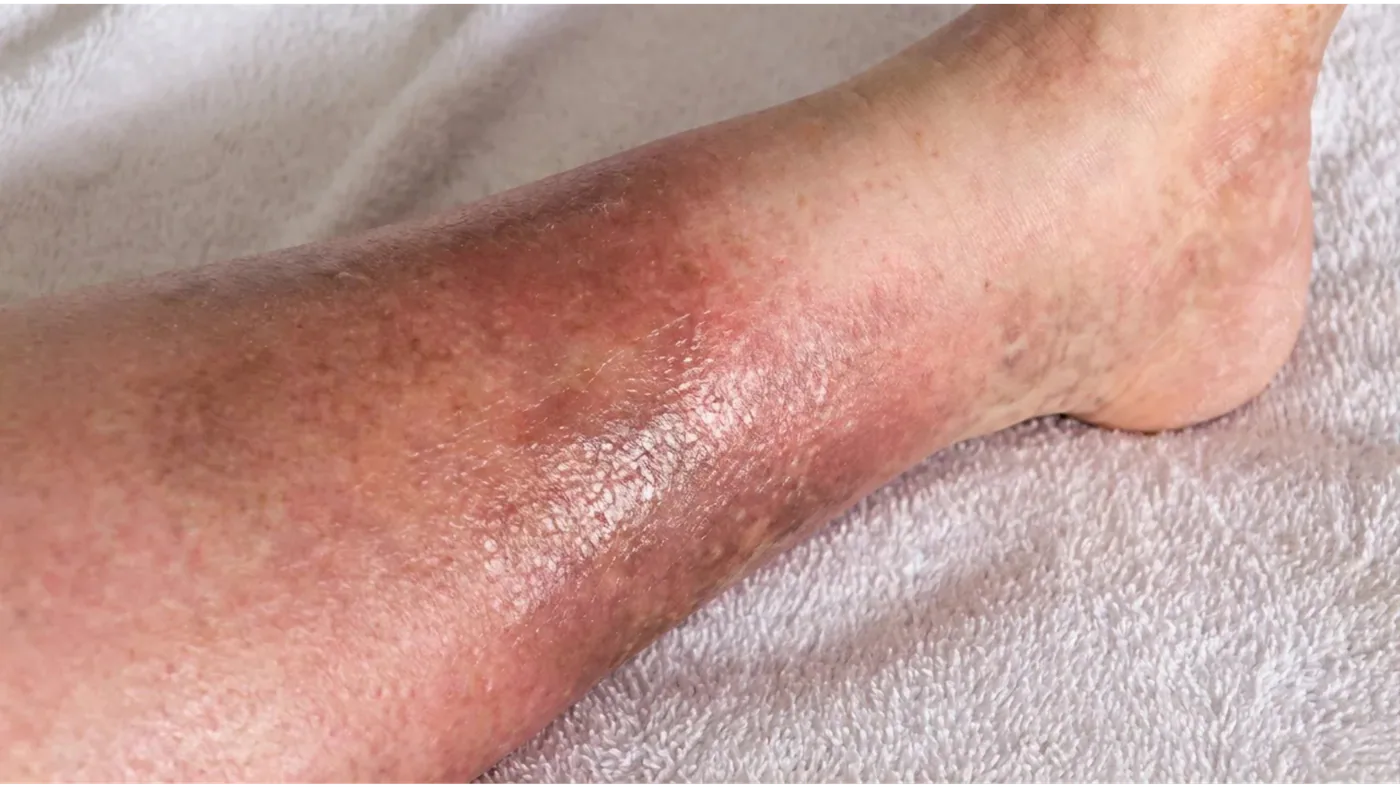
Her ankles were the colour of weak tea. Brown, blotchy and hot to the touch.
Each time, she was given ten minutes. Twice, she was told it was probably eczema.
Not once did anyone mention iron.
The brown colour around her ankles wasn’t eczema. And it wasn’t “just getting older”.
It wasn’t a fungal infection.
And everything she had been advised to try – every cream, every compression stocking, every water tablet and every appointment – was aimed at the wrong problem.
I sat there looking at Margaret’s medical records, and something inside me simply broke.
I knew the system had let her down.
If you’re reading this because you’ve noticed reddish-brown patches slowly spreading up from your ankles …
If your shoes no longer fit by three in the afternoon and you pretend everything is fine …
If you’ve quietly packed away every dress and pair of sandals and only wear trousers in summer …
Then please give me the next five minutes.
They could be the most important five minutes you spend this year.
My name is Karen Mitchell.
I left the clinic in 2024 to run my own private practice, because I couldn’t keep telling women the same lie.
But first, I want to tell you about the night everything changed.
The Night Everything Changed
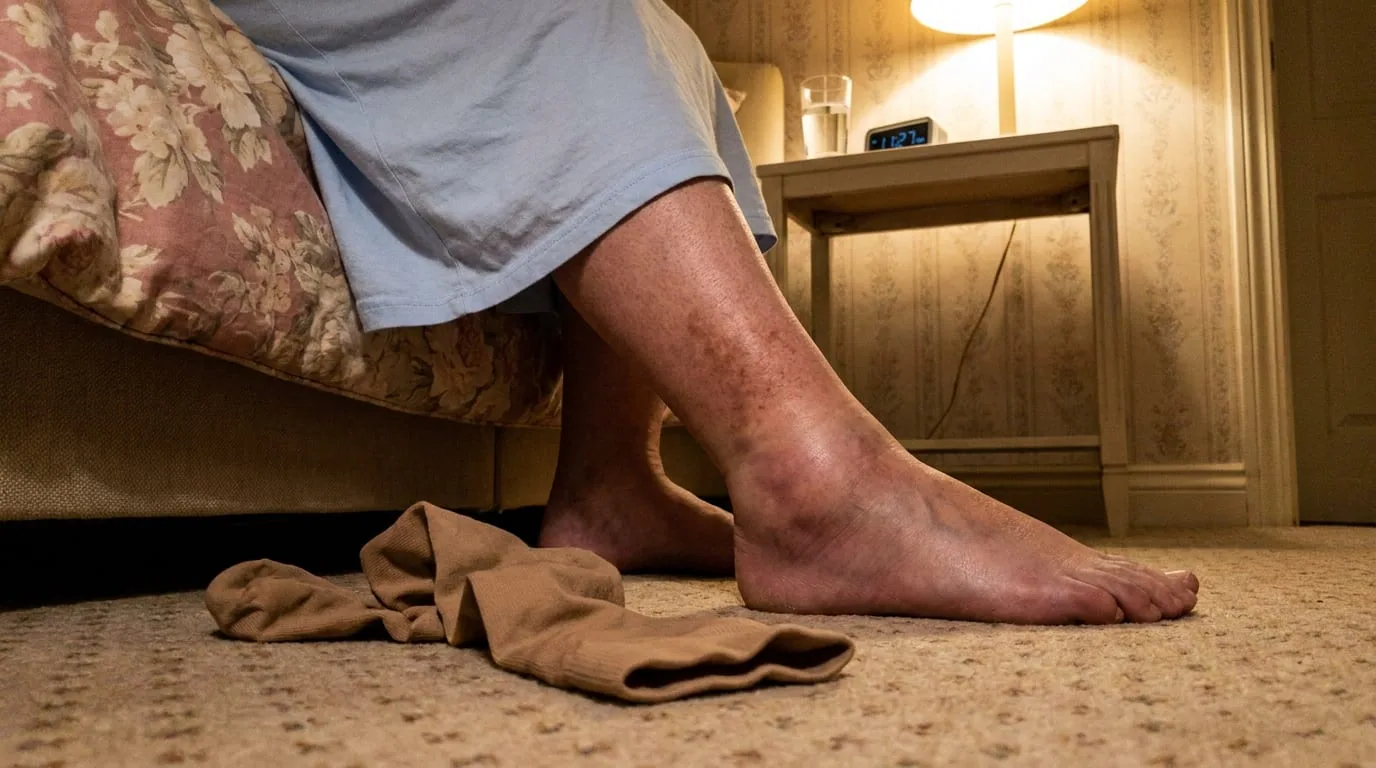
She hated them. She once told me she cried every morning when she put them on.
She had taken water tablets for eighteen months.
She had bought four different “miracle gels” for her legs online.
She had visited a private vein clinic. £300 for the duplex ultrasound scan.
They told her she could have foam sclerotherapy: £550 per session, three sessions, “and we can’t guarantee it won’t come back”.
On things that didn’t work. And she still couldn’t wear a skirt.
I just sat there staring at the kitchen wall.
And I realised something I had never really wanted to admit in my 23 years working on the ward.
What I discovered changed everything

For the next four months, I barely slept.
I read every study I could get my hands on.
I spoke with vascular colleagues at hospitals and universities around the UK.
I worked through medical research late into the night. I spent £5,000 of my own money on research and product samples.
My husband thought I had lost the plot.
And what I discovered honestly made me want to put my fist through the kitchen window.
The UK vein industry is built on a lie
It’s a multi-million-dollar lie.
And it keeps you spending money, again and again and again.
Here’s what they don’t want to tell you:
The brownish-red patches around your ankles are not a skin disease.
They are not inflammation. And they are not eczema.
It is your own iron, leaking from damaged tiny veins, breaking down in your tissue and settling in your skin as a lasting pigment called haemosiderin.
Common dermatology guidelines list this as a recognised sign of chronic venous insufficiency.
NHS information also mentions it.
Vascular specialists overseas talk openly about it.
Yet you may never see this term mentioned on products sitting on the shelves of UK chemists or pharmacies.
Why? Because once you understand what may actually be causing the discolouration, compression stockings and creams that only work on the surface may not address the underlying problem.
These things do not reach the source of the leaking iron. They never have.
The real cause of the brown patches around your ankles
Let me paint you a picture.
Imagine the veins in your legs are like an old garden hosepipe. For decades, it worked perfectly: water in, water out.
But after thirty, forty or fifty years of strain, gravity and wear and tear, tiny leaks begin to form. At first, they are too small to notice. But they are there.
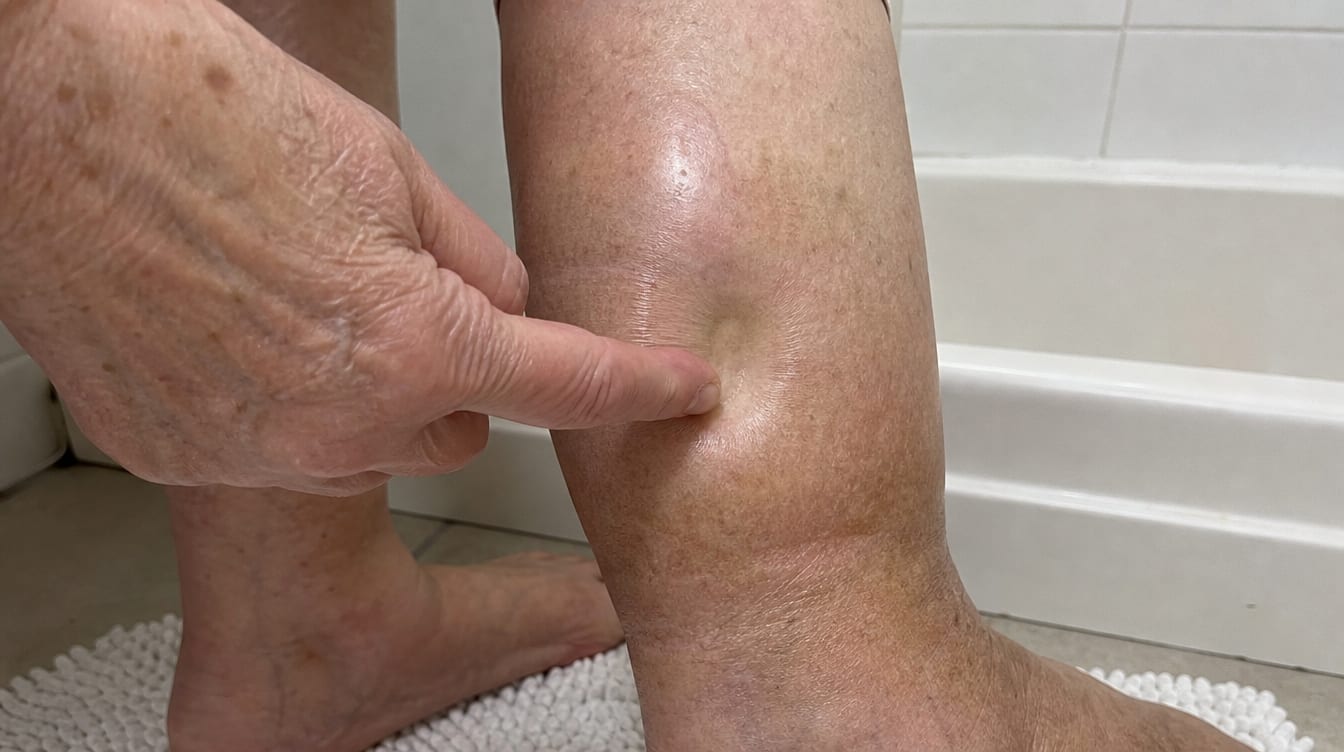
At first, only fluid leaks out. This is the swelling stage. We call it Phase One: Water. Your ankles swell up by the end of the day.
Your shoes feel tight. You press your finger into your shin, and the dent stays there for a few seconds.
You may have been told it’s “just fluid retention” and that you should put your feet up.
The problem is the leaking veins, not your kidneys.
Then, as those tiny leaks get bigger, something more serious starts to escape: red blood cells. Tiny blood cells pass through the damaged vein walls and into the surrounding tissue.
They break down. And when they do, they release iron.
And this iron (yes, the same iron found in supplements) settles into your skin as a rusty-brown stain that won’t simply wash away.
This is Phase Two: Fire. Hot, itchy, burning and brown.
This was where Margaret was. And if you’re reading this, there’s a good chance you may be at this stage too.
If nothing changes, the tissue itself eventually starts to harden.
The skin and the fatty tissue underneath can turn into something that feels like wet wood.
The ankle becomes a firm, fibrous band.
Phase Three: Wood. Lipodermatosclerosis. The point where the damage can become much harder to reverse.
That’s why your ankle feels the way it does. This is the point where the hosepipe is finally starting to fail.
In fact, vascular researchers have spent more than thirty years publishing studies on microcirculation problems and iron deposits in tissue.
The science behind this isn’t new. The research is clear.
But here’s the truth: there isn’t much money to be made from a simple solution.
Horse chestnut can’t be patented. You can’t charge health funds £550 per session for a roll-on applied to the skin.
You can’t keep selling ten-minute appointments that never get to the bottom of it.
That’s why you can get stuck in the same cycle: GP → compression stockings → cream → back to the GP → another examination → private clinic → laser treatment → symptoms return → start again.
It’s a clever system, really. At least if you’re the sort of person who sees a sixty-eight-year-old woman who hasn’t worn a skirt for seven years not as a person, but as a source of income.
The breakthrough nobody is talking about
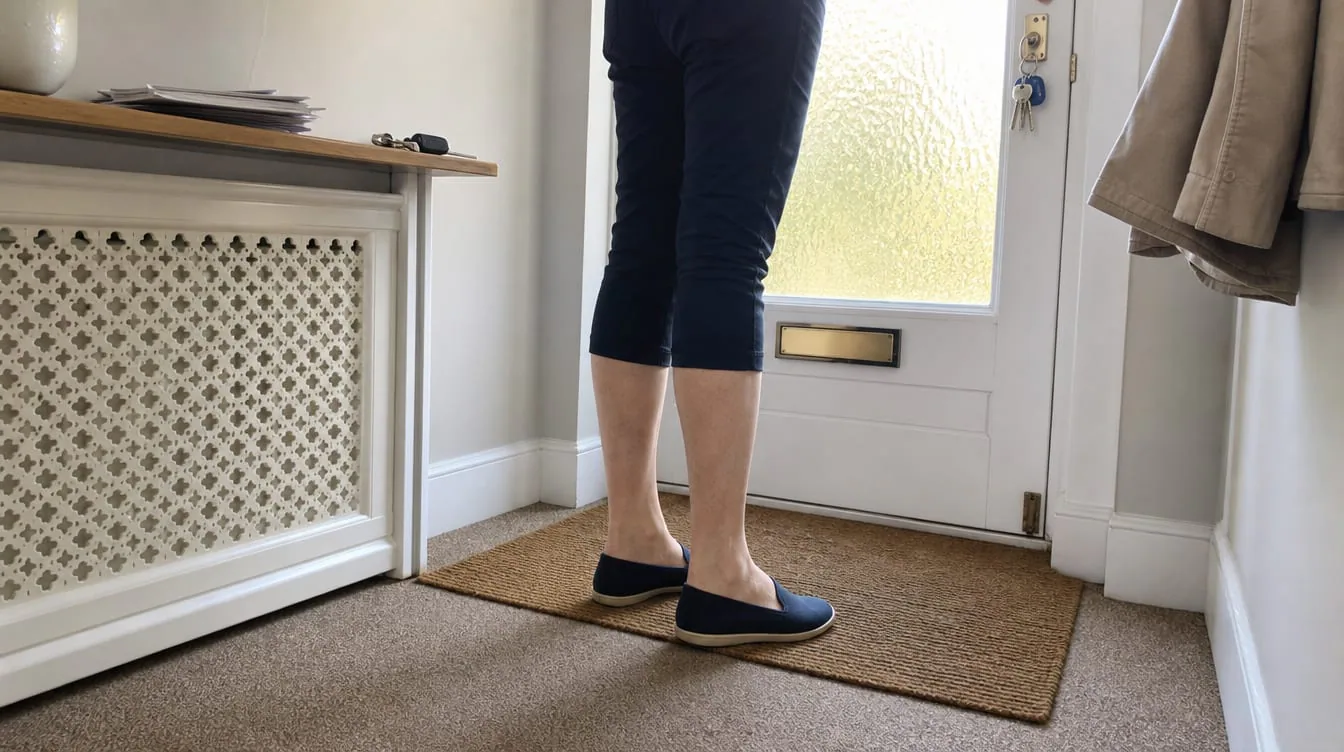
We tested a roll-on formula with Margaret over the next eleven weeks.
She was crying because that morning, for the first time in seven years, she had put on a pair of cropped trousers and her granddaughter had said, “Nan, your legs look better.”
By the eighth week, the brown discolouration around her right ankle was noticeably lighter.
Not gone. But the edges were softer, it was less noticeable and the area felt less hot.
We used a roll-on applied to the skin, made with three specific plant ingredients in three carefully balanced amounts.
It was designed to care for the skin where the problem shows. Not through the kidneys like water tablets, not from the outside in like compression stockings, and not just on the surface like a cooling gel.
By combining three ingredients in one roll-on, we were able to care for three things at the same time.
To really address the problem, you need to do three things at once:
1
Support the strength of the leaking vein walls.
2
Help move built-up fluid and waste products, including free iron, out of the tissue.
3
Soothe burning, itchy and tight-feeling skin without putting further stress on it.
If even one of these three ingredients is missing, you’re wasting your time.
That’s why compression stockings alone don’t solve the problem. (If your GP has prescribed them, keep wearing them. Venacelle is designed to work alongside them, not replace them.)
They put pressure on the outside, but they don’t address the leak itself.
That’s also why water tablets don’t solve the problem. They make your kidneys get rid of more fluid.
That’s why the horse chestnut creams you’ve bought from the chemist, pharmacy or online haven’t worked either – because they contain only one of the three key ingredients, are often combined with too much menthol, and leave out Centella asiatica altogether.
You need all three. At the same time. In the right balance.
A triple-action formula designed to care for the skin where the problem shows.
And that’s exactly what I went looking for.
This breakthrough has an entire industry very worried
I was in the middle of putting my notes together when Janet came into my life.
Janet is sixty-one. She had recently retired after working as a community midwife in Sheffield. For thirty-eight years, she had helped deliver babies across the NHS, with knees and ankles that felt like those of a footballer after a long season.
She had even worn compression stockings during her own three pregnancies.
By the time she retired, her right ankle was the colour of a tea bag left in the cup for far too long, and the skin on her shin felt, as she put it, “like wood”.
She came to see me in May in tears. Not because of the pain.
But because her son was getting married in September, and she had already told her future daughter-in-law that she wouldn’t be wearing the dress.
I gave her one of the formulas I was testing at the time.
Eleven days later, she sent me a message. I’ve kept it ever since.
In September, she wore the dress. There are photos.
Resistance from a completely unexpected direction
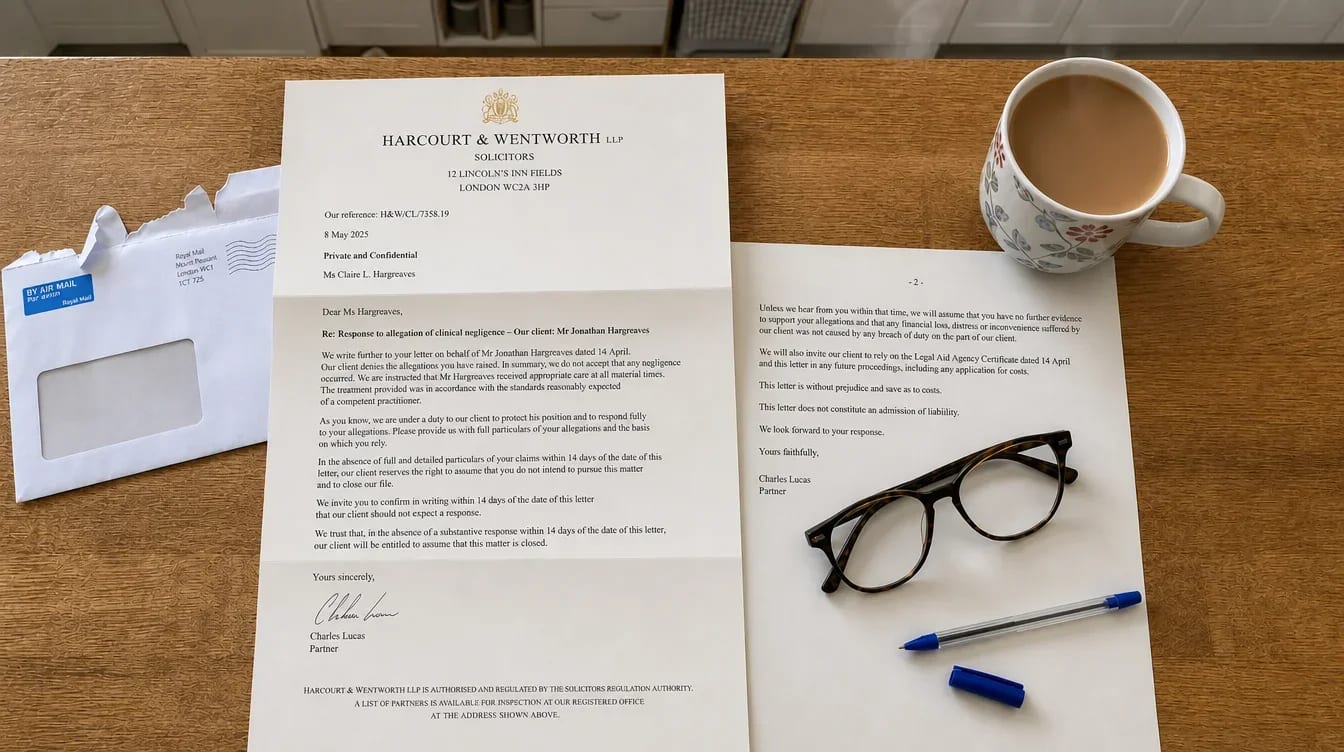
Over a coffee that was never really about coffee, a senior specialist told me I was “getting into dangerous territory”.
A politely worded letter from a private vein clinic, written by a law firm, arrived at my home. It suggested that I should “moderate” my recommendations.
A simple topical solution that:
✅ Cared for the skin where the problem shows, not just the surface sensation.
✅ Started working within days rather than after months of appointments.
✅ Cost less than a single private duplex ultrasound scan.
✅ Gave women a way to support their legs at home, in their own bathroom.
But what the private vein clinics hadn’t counted on was that I had already found the people developing it.
We sat across from each other at a table in Manchester in July.
The brand I now recommend to every patient
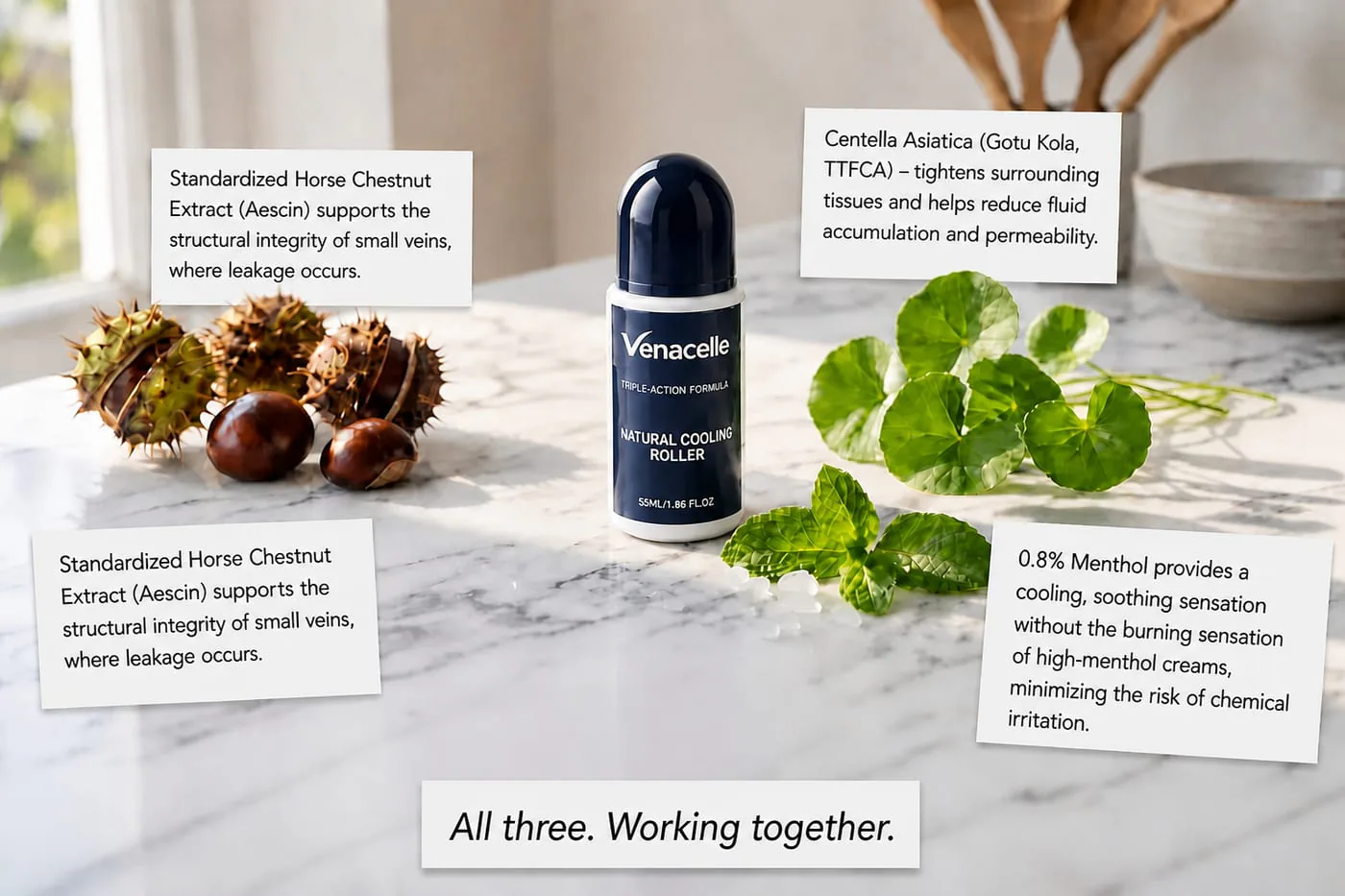
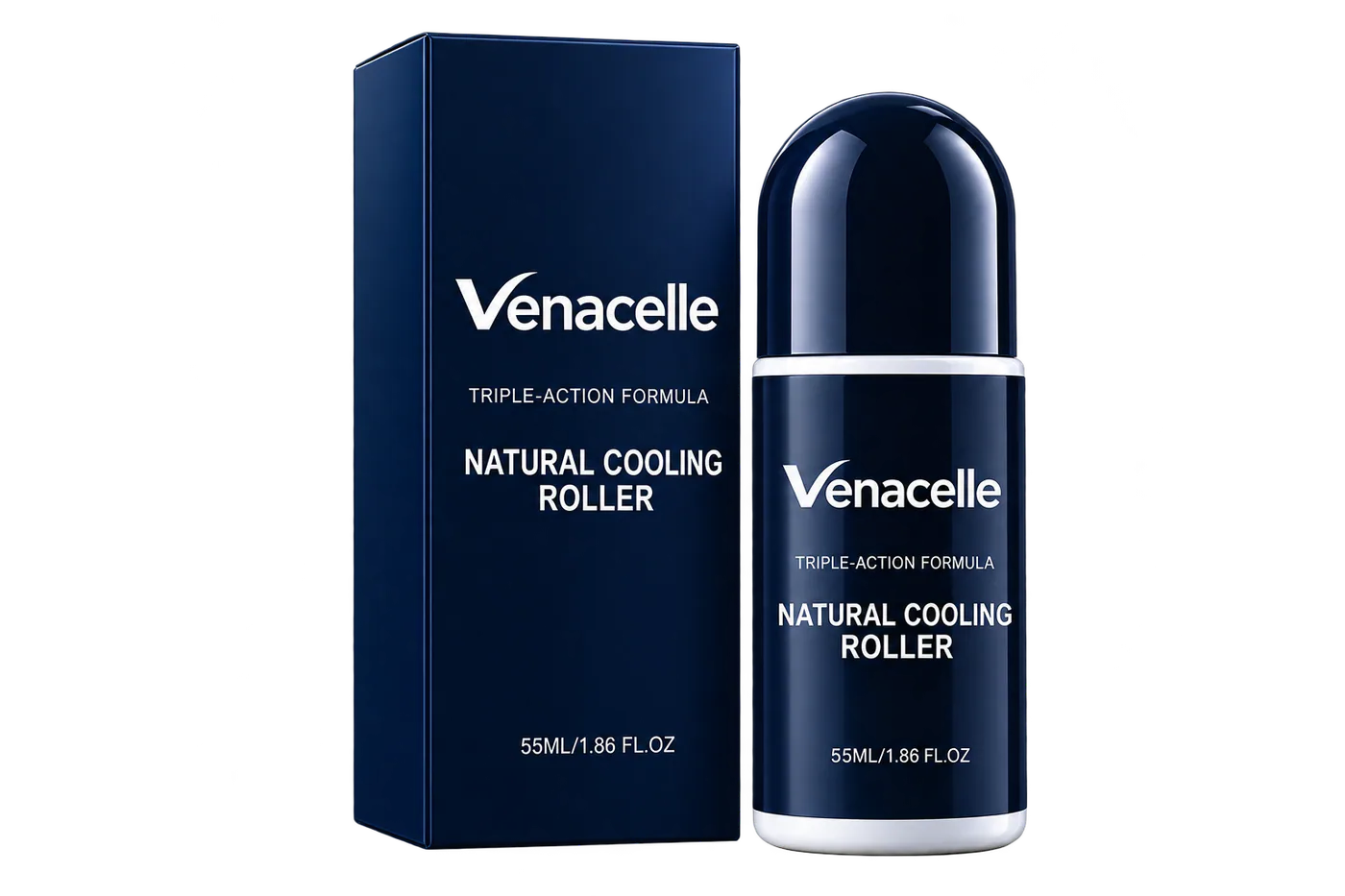
It’s called Venacelle.
I didn’t develop it. The team in Manchester developed it. They have been working on it since 2019.
I came across it almost by chance through a former colleague from a large Manchester hospital, who had been quietly recommending it to her private patients for more than a year.
When I tested the formula with Margaret and Janet, and then with six more women in my private practice, I knew I had found something worth sharing.
Because Venacelle is the only topical solution I found in the UK that brings together all three of the requirements I described above in a single sixty-second application.

Standardised Horse Chestnut Seeds (Aescin)

Centella asiatica (Gotu Kola, TTFCA)

Precisely dosed 0.8% Menthol
All three. Working together. In one simple roll-on.
Apply it morning and evening. Sixty seconds each time.
Roll it upwards from your ankle to just below your knee, following the direction your blood is meant to flow – then get on with your morning.
No waiting for an appointment to get started.
No GP referral needed.
No sitting in a vein clinic waiting room with magazines from 2019.
Relief. Support. Skin that can look more like your own again.
What I found out about this company before I recommended it
Look, I don’t normally put my name to products. Ever.
I’ve been asked many times. And over the years, I’ve turned down every single request.
So before I sent even one of you to this brand, I needed to know exactly who I was trusting you with.
I travelled to Manchester in August.
I asked them every uncomfortable question.
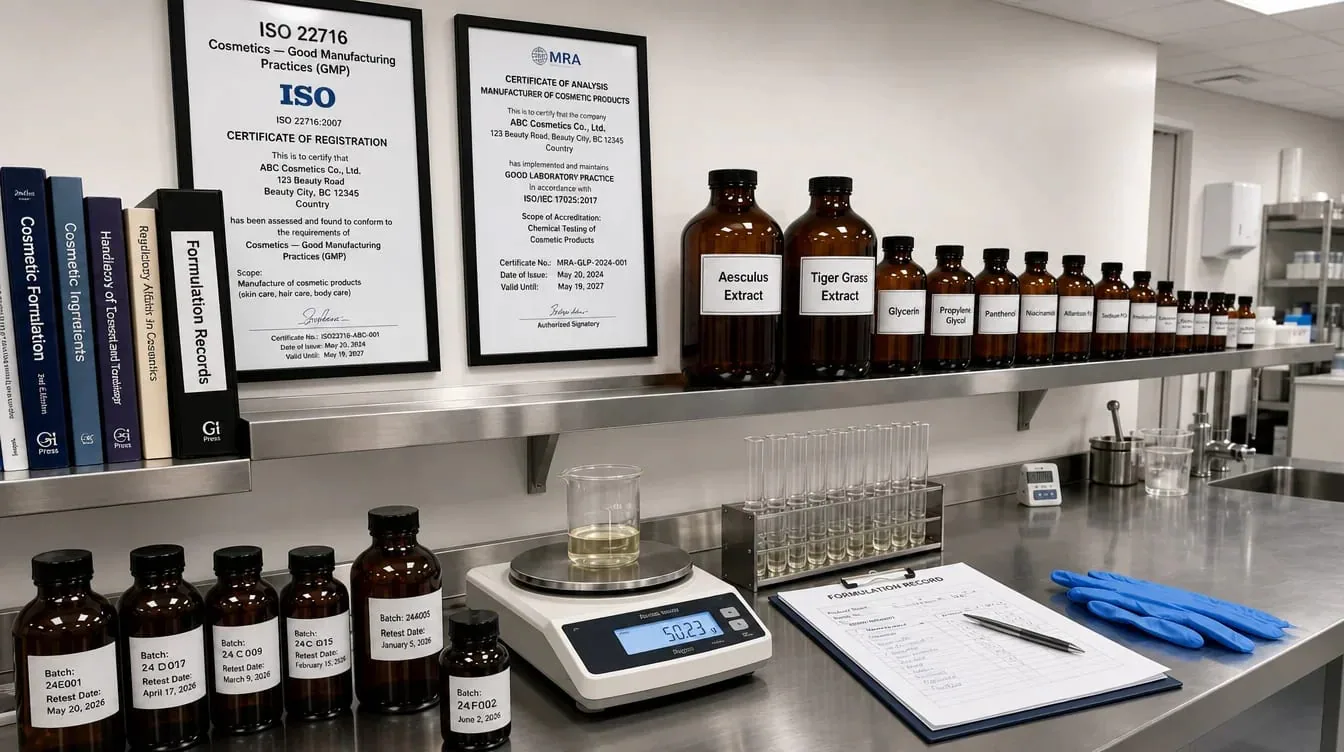
I wanted to see their laboratory certifications.
I wanted the developer’s qualifications in front of me.
I wanted to know why so few of their customers ever asked for a refund.
Here’s what I found:

The laboratory is certified to ISO 22716 for cosmetic manufacturing, the same standard used by major UK personal-care brands.

The lead formulator is a phytochemist with 19 years of experience in the research department of a well-known personal-care company.

The horse chestnut comes from a single specialist supplier, rather than a large bulk commodity supplier.
I emailed the customer service team three times myself, and each time a real person wrote back.
They produce in small batches. Six weeks from raw ingredients to the finished bottle. No fillers, no parabens, no MSM, no alcohol and no added fragrance.
I spent 23 years watching this industry cut corners wherever it could.
These people don’t. That’s why I’m willing to put my name alongside theirs.
How Venacelle supports your legs during the first 7 days
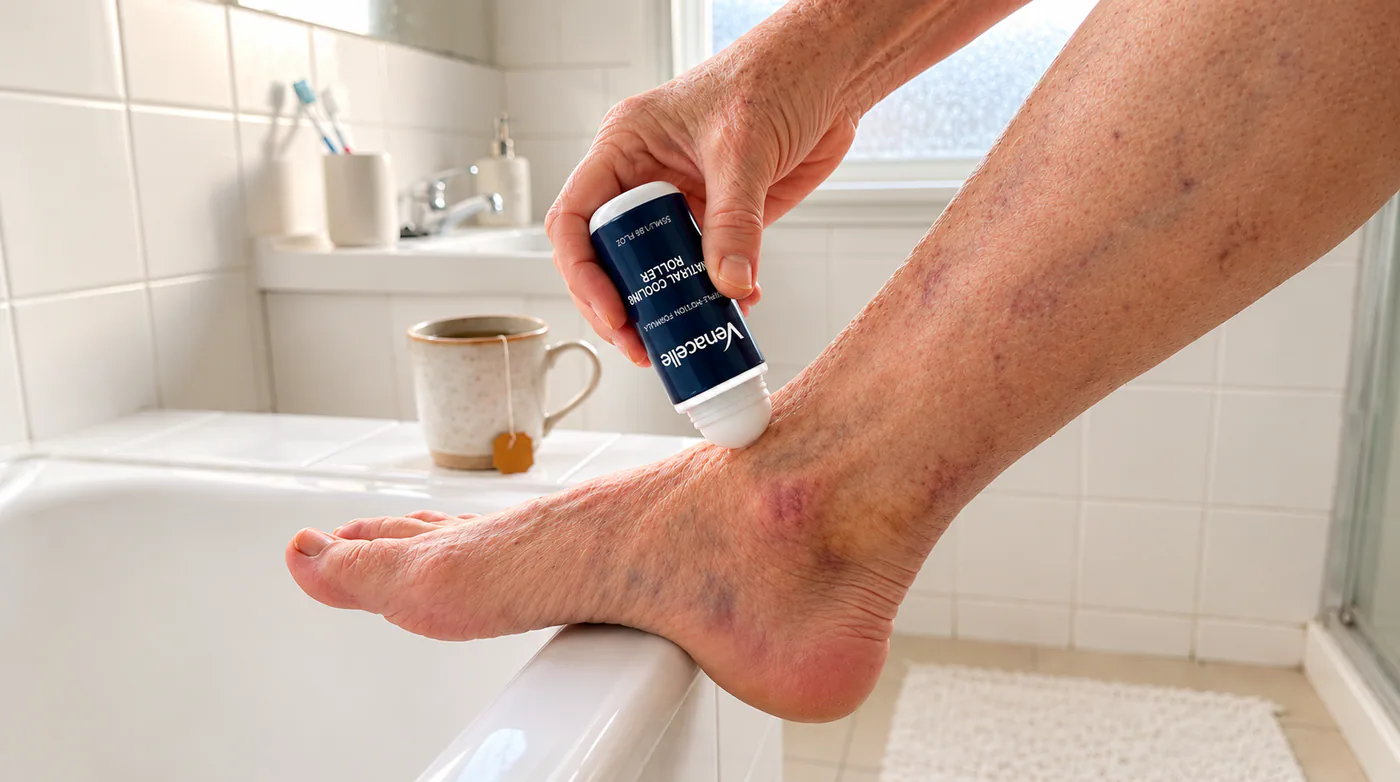
When you apply Venacelle to your ankle in the morning, here’s what is said to happen beneath your skin:
Minutes 0–10: The cooling phase.
These are the same receptors that respond to cold water, while the 0.8% concentration is designed to provide a cooling sensation without the irritation associated with stronger menthol products.
Many women report noticing this within the first three to five minutes.
It’s not simply in your head.
Days 1–3: The soothing phase.
Aescin begins to work into the skin around your ankles.
Nothing changes overnight, but your legs may start to feel lighter.
The dent left behind after pressing your finger into your shin may disappear more quickly.
Days 4–7: The clearing phase.
This is when Centella asiatica begins to play its part.
The skin around your ankles may start to look calmer and more even.
Your skin may start to look less inflamed. Less irritated.
Less like it belongs to someone else.
After 23 years working on the ward, that’s the moment that really matters to me.
Not what some measurement says.
Not what a duplex ultrasound scan shows.
What women have experienced over the past fourteen months
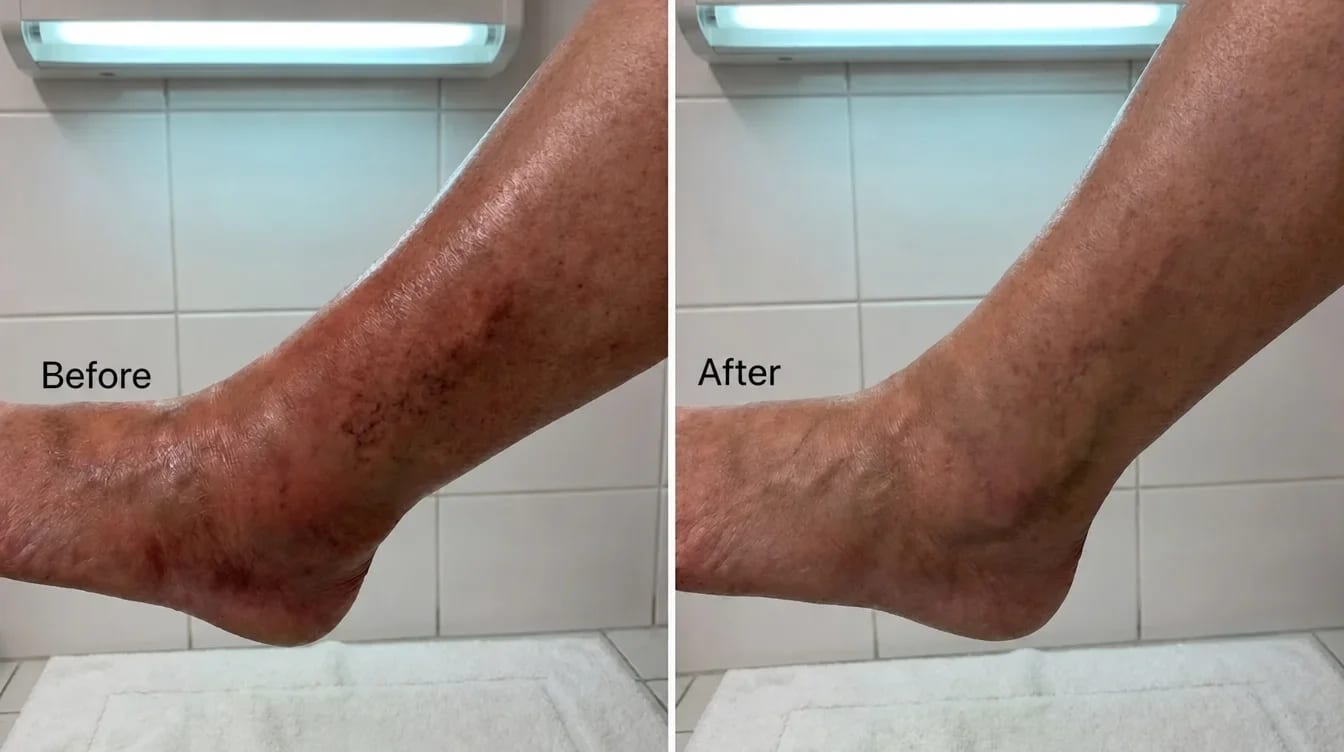
I asked the team in Manchester to send me their data before I put my name behind any of this.
Here’s what they sent me.
- Most reported a noticeable reduction in evening swelling within the first two weeks.
- Many said the burning and itching had “noticeably eased” by the third day.
- Many reported that by the tenth day, they had reduced or stopped using at least one other cream or gel.
- But what really convinced me was how few women ever asked for their money back.
And of the few who did, the founder told me with a straight face, two had cats that knocked the bottle off the bathroom shelf and smashed it.
Don’t just take my word for it.
Here’s what women from across the UK have actually written.

Pauline S.

Verified Purchase
Beverley B.
Verified Purchase
The doctors kept telling me I just had to live with it. Just live with it. As though I had a choice. I started using it in March. At the end of April, I wore open shoes to a friend’s funeral. It sounds strange to be happy about something like that, but they were the first proper shoes I’d worn outside the house for three summers. I cried in the car on the way home.

Carol J.
Verified Purchase
What chronic vein problems really cost women in the UK
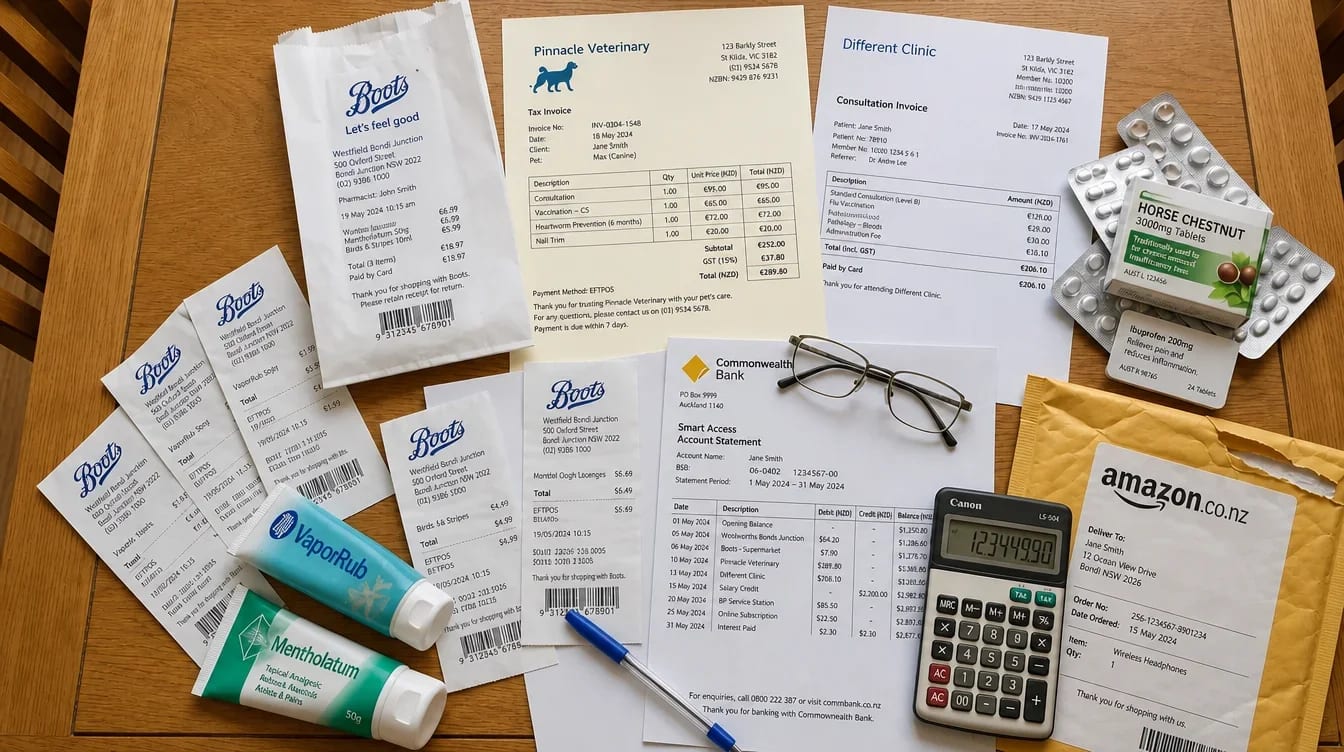
Let me show you what treating this problem can actually cost in the UK.
The public healthcare route:
First GP appointment: it’s free on the NHS, but you may wait weeks for it, and the appointment can be brief sometimes ending with “Just wear compression stockings.”- Compression stockings: around £20 to £50 per pair, often needing replacement every six months, potentially for years
Five years of compression stockings: around £200 to £500, plus the daily hassle of putting them on every morning The reality: the brown discolouration may still get worse because compression stockings can help manage symptoms
But don’t directly eliminate an underlying vein problem
The private clinic route:
First private consultation: around £150 to £300Duplex ultrasound scan: around £200 to £400Foam sclerotherapy: around £300 to £800 per session,sometimes requiring multiple sessions Endovenous laser treatment (EVLT): around £2,000 to £3,500 per legRecurrence can happen, meaning further treatment may eventually be needed
Realistic total cost for treating both legs, including consultations and follow-up care: potentially £5,000 to £9,000 or more
The supplement and gel route:
Horse chestnut tablets: around £10 to £25 per month– potentially for years “Cooling” leg gels from pharmacies: around £8 to £20 per tube,depending on the product Prescription water tablets: free or low-cost on prescription, but they aren’t a treatment for the underlying vein problem and can have side effects
Four years of trying different products: potentially £600 to £1,200in total The reality: you can still end up back at your GP, while the brown discolouration continues to bother you
Private treatment can become an expensive cycle. Do you know why?
Because every “It didn’t work” can lead to the next, more expensive step.
First the cream doesn’t help → then tablets. The tablets don’t help → then compression stockings.
The compression stockings don’t help → then laser. The laser doesn’t help → then another treatment.
It can become an expensive cycle, built around a problem that may continue to worsen.
But there’s another option I wanted to explore.
The price I negotiated for my readers
But I didn’t get involved with this company just to send my readers off to a “fair retail price”.
So I travelled to Manchester again. I told the founder very openly: “My readers are women like Margaret. Like Janet.
He disagreed. I stood my ground. For almost two weeks, we kept going back and forth over the price.
In the end, he agreed to offer my readers a special reader price through this page.
Apparently, his finance director was anything but happy about it. Good.
I’m not going to reveal the actual price here.
The brand specifically asked me not to publish the reduced price on any page that major retailers could screenshot. Because as soon as major pharmacy chains see it, they’ll demand the same wholesale terms – and the entire pricing structure could fall apart.
You’ll see the actual price on the next page once you click through.
But I can tell you one thing: it’s only a fraction of what you could spend on a single private vein consultation.
Less than you could pay for a Sunday roast for the whole family.
Why I can’t promise this price will last

When the founder agreed to give my readers this discount, he had just one condition: the reader price can’t stay up forever.
He doesn’t want this price available online for any longer than necessary. As soon as major health and wellness retailers see the price my readers are getting, they’ll demand the same wholesale terms – and his entire pricing structure could be thrown out of balance.
So that’s the deal.
He can withdraw the reader price at any time, and when he does, it goes back to the regular retail price.
I asked him to guarantee it for longer. He wouldn’t.
So if you’re thinking about it, I’d take it while it’s still here.
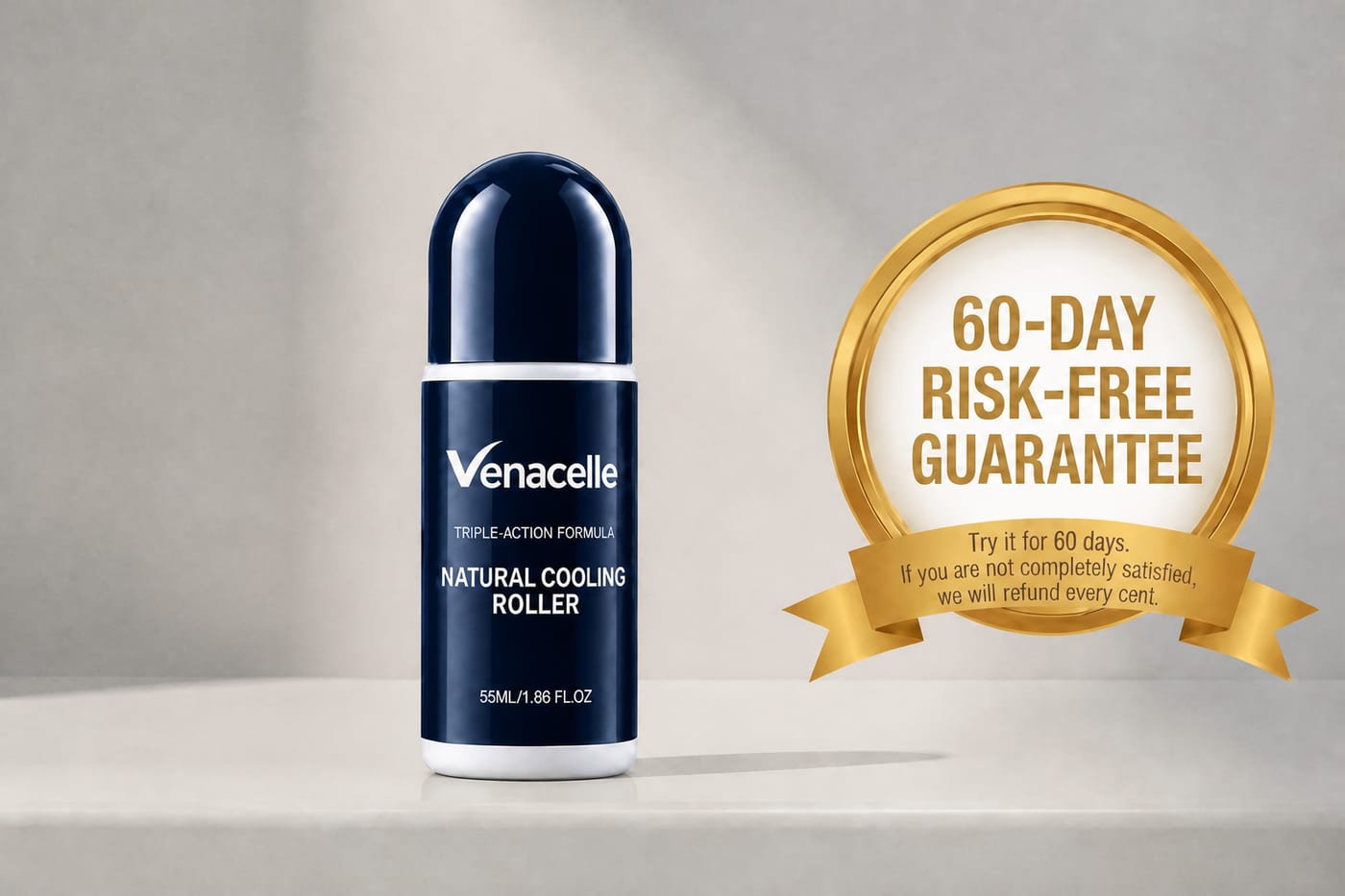
The brand’s 60-day guarantee: “Your legs or your money back”
Look, I know how all of this sounds. You’ve been disappointed before. You’ve spent money on miracle products that ended up being an expensive let-down.
That’s why the company offers the following – and it’s exactly why I trust them.
Try Venacelle for a full 60 days. That’s two whole months.
Long enough to test it under all kinds of challenging conditions: on a long flight, at a wedding, standing in a supermarket queue on a sweltering summer’s afternoon, after a long day on your feet or after three hours in the car.
Long enough that, by the end, you can’t make an excuse like: “I didn’t really give it a proper chance.”
Use it every morning and evening. Roll it on. Sixty seconds. Then get on with your day.
And if you don’t wake up one morning, look at your ankles and think: My goodness, they look like my legs again – then you’ll get every penny back.
No store credit. No complicated process.
Simply email the customer service team. Write: “It didn’t work for me.” Your refund will be processed quickly.
I asked the founder why they offer 60 days when most leg-care brands only give you thirty days. His answer was: “Because we want every customer to have enough time to experience the results for themselves. If we can’t achieve that within 60 days, we haven’t earned her money.”
Hardly anyone asks for a refund. The roll-on works. Full stop.
You’re at a turning point

Right now, you’re standing at a crossroads.
Option one: You carry on as you have been.
You keep struggling with your compression stockings every day.
You keep cancelling holidays because you don’t want to be the one wearing long trousers at the beach.
Option two: You try something that is designed to care for the skin where the problem shows.
You spend less than you would on a single private vein consultation.
You receive a roll-on that has already been used by thousands of women across the UK.
You give your legs daily care instead of just covering them up.
You wake up tomorrow with a little hope instead of the same quiet worry.
For me, honestly, the choice is obvious.
Because let’s be honest with each other.
Chronic venous insufficiency is a progressive condition.
If you don’t change anything, it can get worse over time.
Remember: you have nothing to lose.
Either way, you’ll be in a better position than you would be tonight if you did nothing.
Here’s what to do next, step by step
Click the button below labelled “CHECK AVAILABILITY”.
- Choose your package (a little tip: take three bottles rather than one. That covers the full 60 days, and the price per bottle is lower).
Enter your delivery address (orders placed before 11:59 pm are dispatched the next day).
- Delivery within the UK is free.
Apply the roll-on on the first morning after it arrives.
Email the team in three weeks and tell them what your husband said when he noticed the difference.
There is no “later” when your legs are still feeling hot and looking brown at midnight on an ordinary Tuesday.
“Later” means the next wedding where you turn up in a long dress.
With hope,
Karen Mitchell, Registered Nurse, former vascular nursing specialist, York
P.S.
P.P.S.
P.P.P.S. I’m serious about the guarantee. Try Venacelle for 60 days. If your legs don’t look and feel better, email the team and you’ll get every penny back.
Get up to 50% off!
This offer is extremely popular,
We can’t guarantee that Venacelle will be available again at this price.
🎁 Customer favourite!







Recommended:
★★★★★
⭐ 4.8 | 13,420+ reviews


Venacelle

No more burning, swollen ankles
Feel confident showing your legs again
No prescription or clinic visit needed
Triple-action plant-based formula
The information on this page or in the related materials is not intended as medical advice and does not replace professional diagnosis or treatment from a qualified medical professional.
If you or someone else has a health concern, we recommend seeing your GP or another qualified health professional.
Professional medical advice should never be ignored or delayed based on the content of this page or any related materials.
If you believe you are experiencing a medical emergency, call your doctor or dial 999 immediately.
© Wellavique 2026. All rights reserved.
Privacy Policy · Terms of Use